Reef Ball Foundation Photos and Project Description Database


Only Search Reef Ball Photos and Project Database
Up one level Geographical Database for photos, videos, GPS Coordinates, news, and project descriptions. » Maryland Reef Ball Projects and Photos

Maryland Reef Ball Projects and Photos
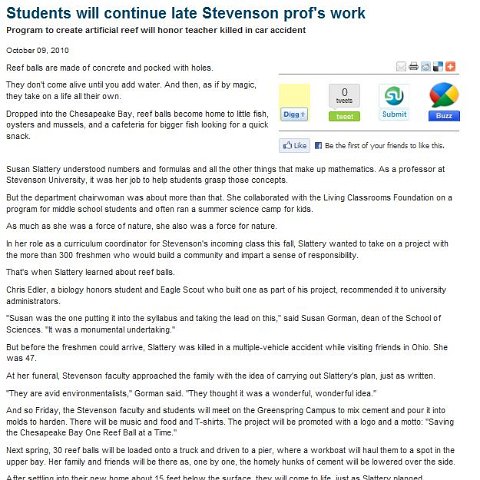
Maryland has recently expoded on the Reef Ball scene since Maryland Environmental Service, a Reef Ball authorized contractor, spearheaded our effort there. Wayne Young (no longer with MES) spearheaded the initial efforts with great intensity. There are so many Reef Ball projects in Maryland we are still trying to document them all. Projects have been focused on oyster restoration and finfish projects mainly in the Chesapeake Bay. Lots and Lots of schools and local grassroots organizations are involved. Some great science is being conducted too. Click here for World Mapping System Information on Maryland Note: Many photos from Maryland were submitted to us in PDF format and may not be included here...use the mapping system if you can't find your photos or project.

At first page Next page 1-32 (of 1 found)
breakwaterproject
Chesapeake Ranch Estate's Maryland Eastern Shore Breakwater Project Photos  |  Total images: 69
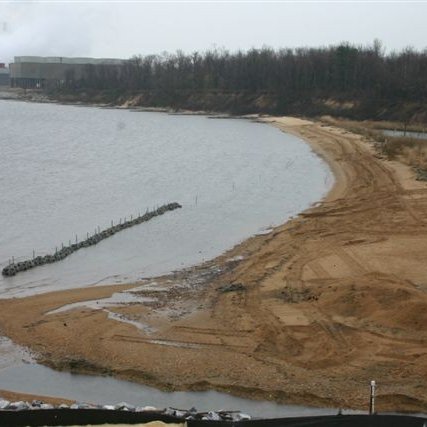
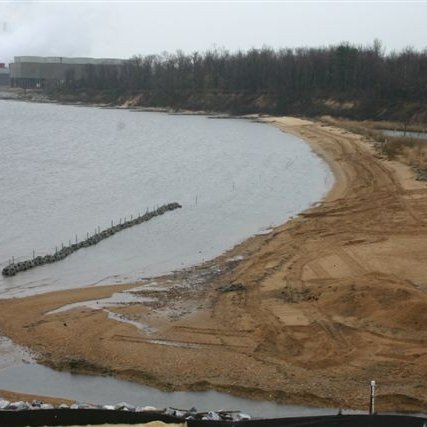
Look out from their deck and the Chesapeake Bay spreads out in sun-glittered splendor, an azure expanse punctuated by sailboats and seabirds and far in the distance the wooded shoreline of Maryland's Eastern Shore. Look down from their deck, 100 feet nearly straight down, and try not to lose your lunch. Tony Vajda is manufacturing hollow concrete domes that he will drop offshore in hopes of slowing erosion. The spectacular view is what attracted retirees Marcia Seifert and Phyllis Bonfield from Philadelphia to the top of Calvert Cliffs in Southern Maryland five years ago, but they didn't realize it would get quite this dramatic. Their two-story home is now 12 measly feet from the edge of the precipice, about 35 feet closer than it was two years ago. The inexorable erosion of the cliff face has sloughed off massive slabs of earth and trees, and because an endangered beetle happens to live in the cliffs, the residents have not been allowed to stop it. "It's scary," said Bonfield, looking down the dizzying sand and clay cliff face. "We don't know how long Mother Nature will allow us to be here," Seifert said. Erosion is like receding gums or the depreciation of cars. It is a slow battle and one you most surely will lose. And along the circuitous 7,700 miles of Chesapeake Bay shoreline, the wind and waves are winning in ever more emphatic fashion. Geologists say sea levels in the bay are rising about one to two feet per century -- a rate double the world average -- although they do not agree how much is because of global warming and how much because the land is subsiding. Add to this storm water rushing down from an increasingly developed coastline, and scientists find that land in many spots is falling into the sea at a rapid clip. Every century, an area roughly the size of the District is being lost around the Chesapeake Bay. Each year, about 260 acres of shoreline disappear from Maryland alone. Populated islands that once speckled the bay have been submerged and swept away. "When you're raising the water level, you just have so much more susceptibility to any kind of wave attack," said Court Stevenson, a professor at the University of Maryland Center for Environmental Science's Horn Point Laboratory in Cambridge. In such places as Calvert Cliffs, erosion happens in fits and starts. After the bay licks away the toe of the cliff, a big storm or prolonged rains can saturate the top until it cannot bear its own weight and crashes down. This month marks the start of hurricane season; two years ago, the surge of Hurricane Isabel tore 20 acres of land from the Chesapeake's western shore. This time around, the cliff dwellers of Chesapeake Ranch Estates said they worry about when their number might be up. "Calvert County is already the smallest county in Maryland, and it's getting smaller every day because it's falling into the bay," said John Eney, president of Chesapeake Ranch Estates, which has 3,700 homes, including 100 perched on the lip of Calvert Cliffs.
chesapeakebayenvirnomentalcenter
Chesapeak Bay Environmental Center Reef Ball Project Photos  |  Total images: 49
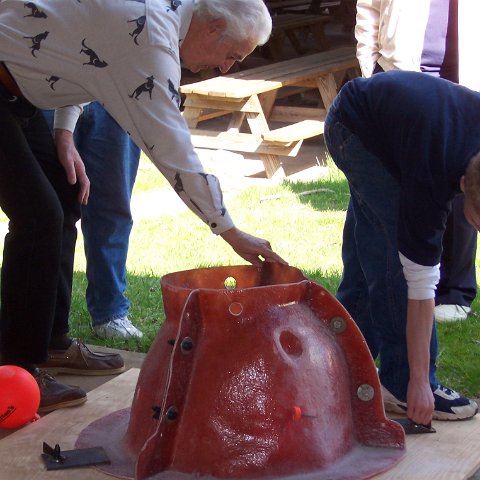
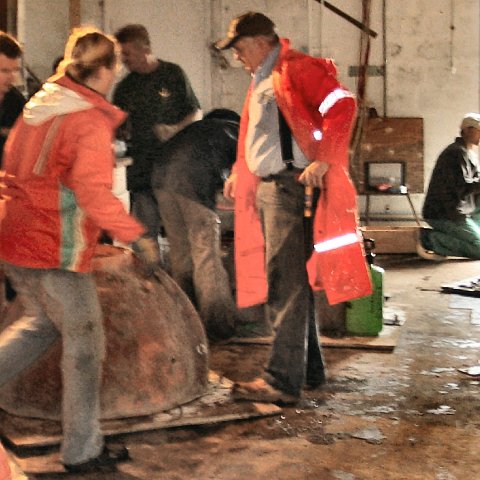
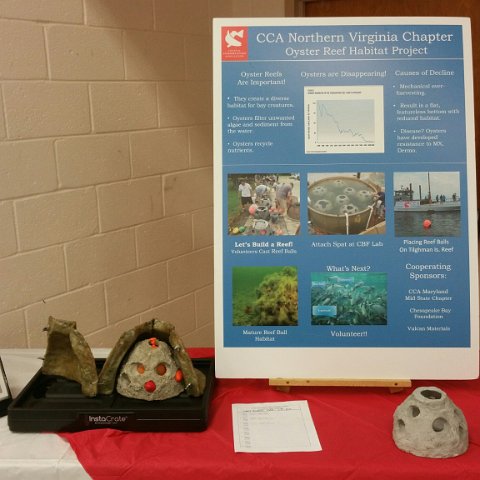
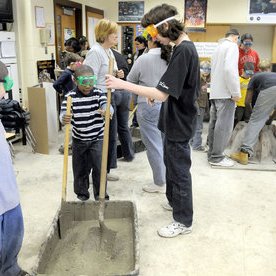
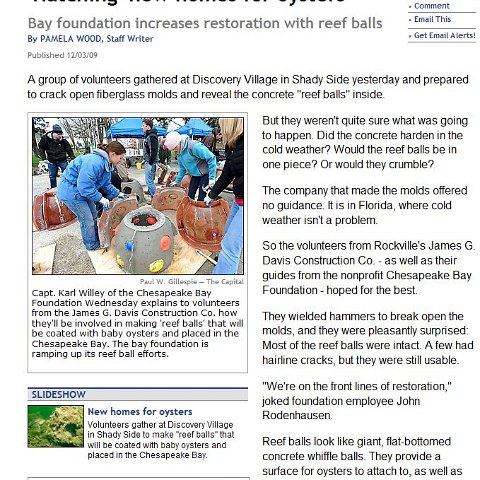
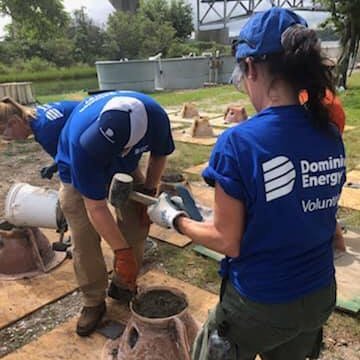
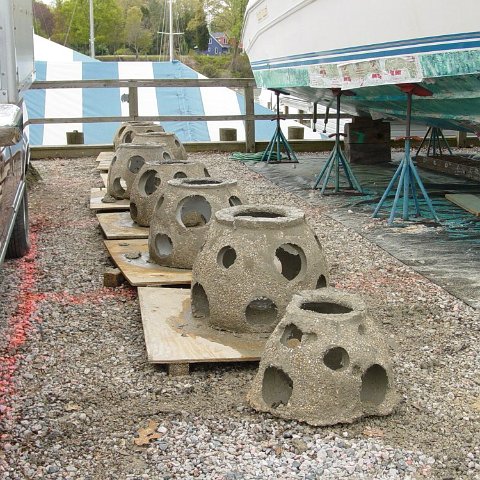
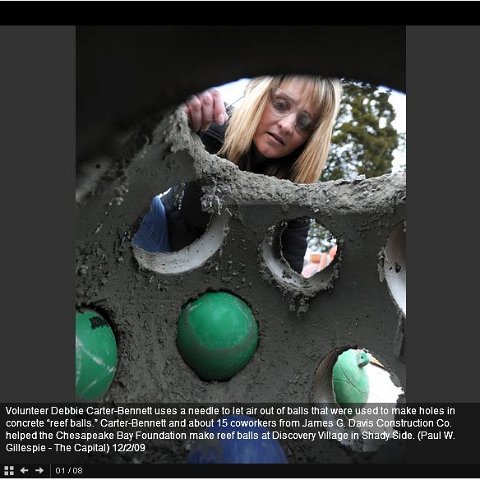
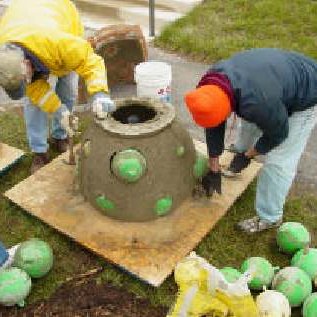
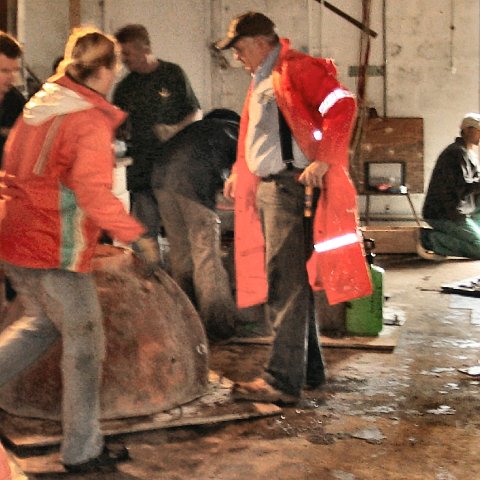
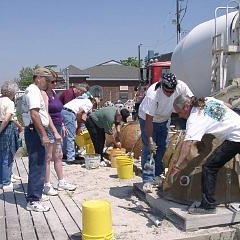
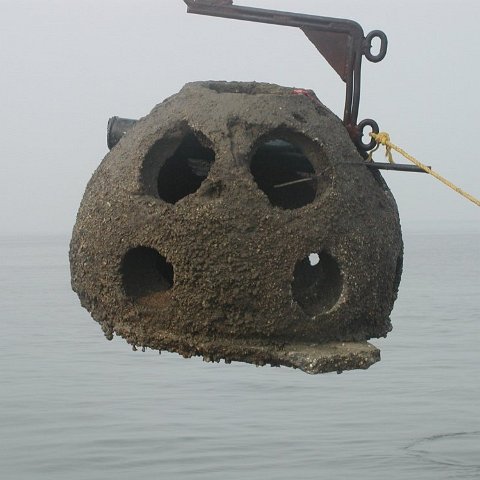
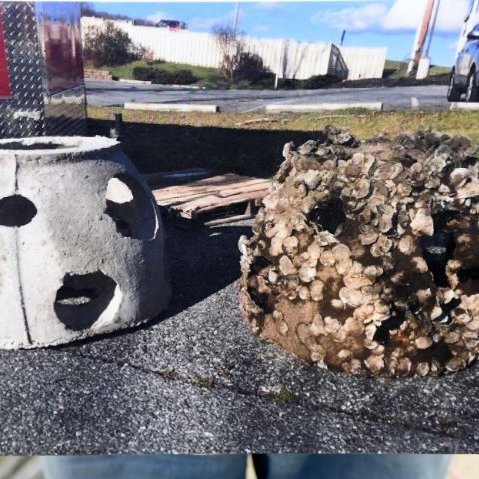
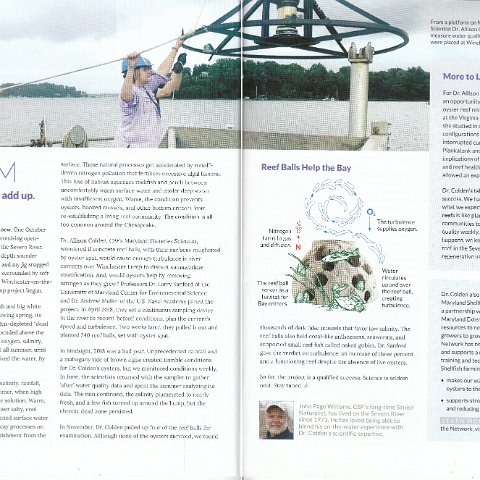
Twenty-five students from the ecology enrichment program at Kennard and Sudlersville Elementary Schools spent the entire school year exploring the ecosystem of a newly created oyster reef just offshore CBEC in the serene waters of Prospect Bay, near the base of the Bay Bridge. The new habitat area is built from specially constructed ?reef balls??large halves of hollow spheres, crafted from concrete and micro fibers that help organisms attach to the surface. The reef balls range from 250 to 400 pounds and are up to 3 feet high. Neat circular holes puncture the surface of the balls, providing passageways for fish and creating a look that CBEC visitors sometimes describe as a Swiss cheese ball or a concrete beehive. In March, CBEC worked with a number of partners, including the Maryland Environmental Service, Oyster Recovery Partnership, Langenfelder Marine Inc., Maryland DNR and the Chesapeake Bay Foundation, to deposit the reef balls into the water. ?We used 132 balls, arranged in clusters to mimic natural underwater topography,? Paulas said. GRASONVILLE - Volunteers from the Chesapeake Bay Environmental Center and Maryland Environmental Service staff members spent two and a half days last week pouring special marine-friendly concrete into molds, removing the molds like an eggshell and revealing reef balls. What is a reef ball? A reef ball is an artificial reef designed to create habitats for fish and other marine and freshwater species. The balls vary in size, have a dome shape and are hollow with several holes for aquatic creatures to use as a habitat. The reef ball project at the center has been funded by a $25,000 grant from the FishAmerica Foundation, the American Sportsfishing Association and the Chesapeake Bay Trust. The intent is to promote and support natural species diversification, as well as oyster and fish rehabilitation in the Cabin Creek area of the Chesapeake Bay.
ferrypointandmespics
Ferry Point Training Project  |  Total images: 76
March 2003 Maryland Ferry Point Training Project for Maryland Environmental Service This year?s annual Earth Day project shows that MRA and USNA make a great team. Eleven divers from the Naval Academy?s Oceanography Club were able to come out this year. Several of the midshipmen participated last year in the Earth Day dive, but all were impressed with the beautiful morning and conditions we had topside. As always, the conditions underwater boasted murky visibility, but this was no recreational dive. The divers from USNA and around the community paired up to move the first of several reef balls into position for what will eventually be known as the catalyst that improved recreational fishing and the ecosystem in the Magothy River.
memorialstaduimhornpoint
Memorial Stadium Oyster Reef Sanctuary Project Photos  |  Total images: 10
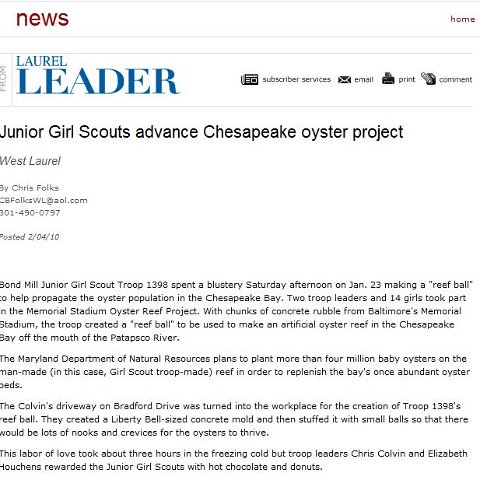
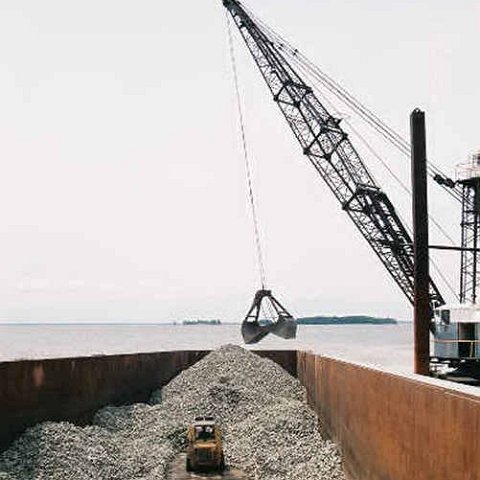
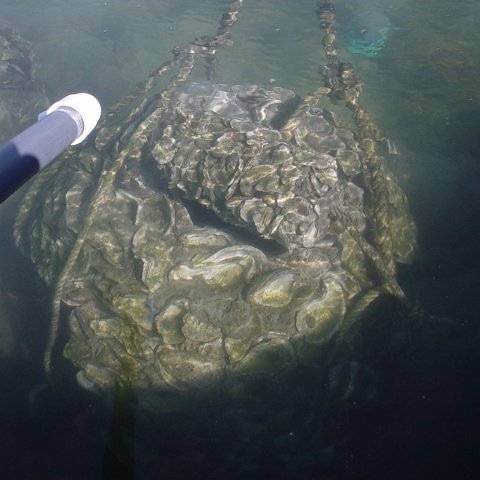
During the summer and fall of 2002 UMCES researchers teamed with private and state agencies to create the 6-acre Memorial Stadium Oyster Reef Sanctuary, created with rubble from Baltimore's famous arena. An innovative oyster reef restoration project, it was a joint project among the Center, private and state agencies and was aimed at restoring oyster in the upper Chesapeake Bay where oyster reefs were once abundant. For the Memorial Stadium project, Dr. Donald "Mutt" Meritt and Horn Point Laboratory Shellfish Culture Facility technicians at UMCES were charged with populating 14 concrete reef balls designed for the project with oyster spat. Reef balls are commonly used in coral reef restoration but this project was the first time they were used for oyster spat. Using more than 20 million oyster larvae, the reef balls were set at the culture facility for a week before being transported into the lab's nursery in the Choptank River, done with the assistance of the Oyster Recovery Partnership. On October 3, the reef balls along with 10,000 cubic yards of rubble were planted at the reef site, three miles of Tolchester beach in Kent County.
meshillmayrlandoysterprojects
Mill Hill Oyster Sanctuary Project  |  Total images: 8
Installation of 59 Bay Balls (and remants of 2 units damaged during transit from Florida and 1 unit damaged during barge loading) were successfully placed at the new Mill Hill Oyster Sanctuary in the eastern portion of Eastern Bay. 8/202
mesproject1marylandoysterprojects
mesproject1marylandoysterprojects  |  Total images: 14
MES August 2002 First Project
oceancity
Ocean City Eternal Reefs Project Photos  |  Total images: 62
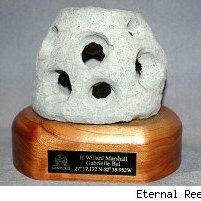
September 22, 2004 With her right fist clutched over her heart and tears trickling down her cheeks, Jamie Wehler watched as her husband's ashes, encased in a concrete artificial-reef ball, slid off the back of a nearby boat and into the Atlantic. It was time for her to say a final goodbye to the physical remains of Charles Michael Wehler, her husband of 32 years, who died a year ago. He was a man who loved nature and camping at the South Jersey shore. He also liked boats and fishing, but only catch-and-release, his wife said. "To him, nature was something that you become a part of; you leave nothing but footprints, take nothing but pictures. I think that's just what we've done," the Westminster, Md., woman said a few minutes after her husband's reef ball sank into more than 60 feet of water.
tilghmanproject
Tilghman Island Reef Ball Project Photos  |  Total images: 10
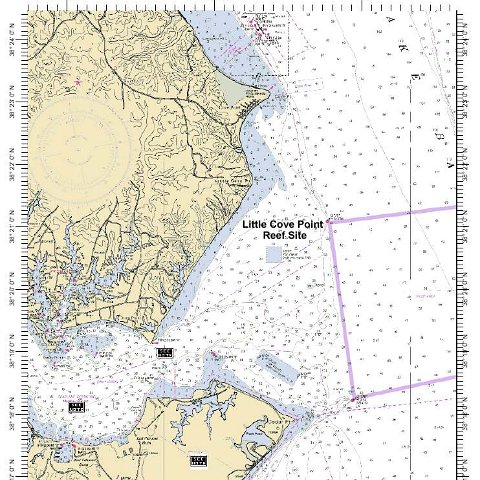
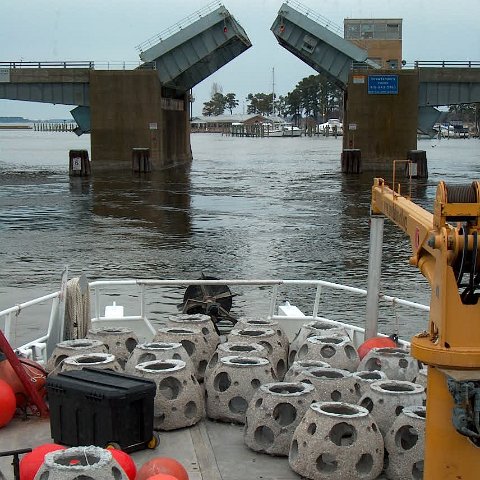
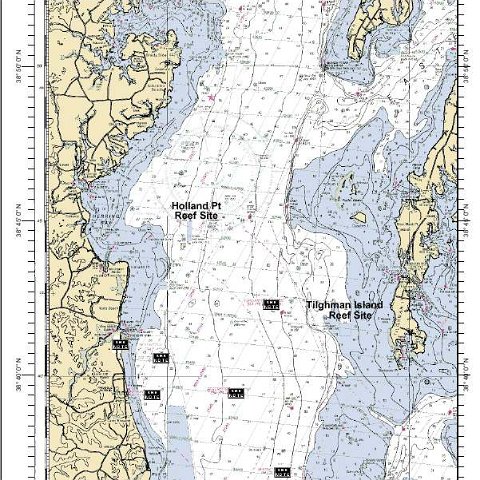
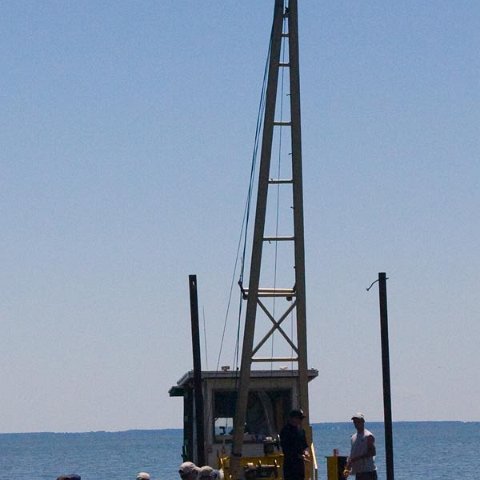
Tilghman Island Reef Ball Project: Placement of 15 Reef Balls occurred on Nov. 12, 2004. These were Reef Balls that had been produced at the first production pour in April 2004. The Robert Lee placed the Reef Balls at the Tilghman Island artificial reef site off Tilghman Island, Talbot County, Md. Costs were covered by the Constellation Energy and CBT/FAF grants and MES project development funds. The project was done in cooperation with local sport fishermen and charter captains. Following his visit to the Poplar Island Environmental Restoration Project, Maryland Comptroller William Donald Schaefer joined Conway Gregory, Deputy Director of the Maryland Environmental Service (MES), for a tailgate Reef Ball demonstration. Wayne Young, MES Artificial Reef Coordinator, discussed the state?sartificial reef program. He explained unique features of Reef Balls using a cutaway model and reported thatmold systems for smaller Reef Balls provide a user friendly resource for environmental education and public outreach to help improve awareness of environmental restoration needs in the region. Schaefer assisted inremoving the fiberglass mold from a 50 pound ?Oyster Ball.? The surface layer was washed off to create ahighly variable texture and recessed attachment points for colonization by marine organisms once deployed.MES is working on several reef development projects and will deploy more 375 Reef Balls at various artificial fishing reef sites. Grant support for Reef Balls and their deployment has been provided by the Abell Foundation, Chesapeake Bay Trust and Fish America Foundation. Organizations involved in these projectsand similar reef development projects include Chesapeake Bay Environmental Center, Chesapeake BayFoundation, Coastal Conservation Association Maryland, Magothy River Association, Maryland Charter Boat Association, Oyster Recovery Partnership, Solomons Charter Captains Association, the Maryland SaltwaterSportsfishermen?s Association and others. The Maryland Department of Natural Resources (DNR) Isproviding fisheries management, policy and technical guidance, and coordination support for reefdevelopment.
universityofmarylandenvironmentalscience
Horn Point University of Maryland Center for Environmental Studies (UMCES) Reef Ball Project Photos  |  Total images: 2
University of Maryland Center for Environmental Studies (UMCES) Reef Ball Project: The Sandy Point Integrated Ecosystem Restoration (SPIER) Initiative by UMCES is a restoration and habitat project planned for the late spring/early summer. The project is located at the tip of Sandy Point on Solomons Island, Calvert County, Md. in the shallow water adjacent to the Chesapeake Biological Laboratory (CBL). MES agreed to fund, through the CBT/FAF and Abell grants, the procurement and transportation of 100 Reef Balls as part of the SPIER initiative. Deployment is expected to take place in the late spring, early summer, 2005. HORN POINT, Md. -- During the summer and fall of 2002 UMCES researchers teamed with private and state agencies to create the 6-acre Memorial Stadium Oyster Reef Sanctuary, created with rubble from Baltimore's famous arena. An innovative oyster reef restoration project, it was a joint project among the Center, private and state agencies and was aimed at restoring oyster in the upper Chesapeake Bay where oyster reefs were once abundant. For the Memorial Stadium project, Dr. Donald "Mutt" Meritt and Horn Point Laboratory Shellfish Culture Facility technicians at UMCES were charged with populating 14 concrete reef balls designed for the project with oyster spat. Reef balls are commonly used in coral reef restoration but this project was the first time they were used for oyster spat. Using more than 20 million oyster larvae, the reef balls were set at the culture facility for a week before being transported into the lab's nursery in the Choptank River, done with the assistance of the Oyster Recovery Partnership. On October 3, the reef balls along with 10,000 cubic yards of rubble were planted at the reef site, three miles of Tolchester beach in Kent County. This project was one of over 15 oyster restoration projects created in 2002 that utilized the over 73 million oyster spat produced in 2002 at the Center's culture facility. The shellfish culture facility at Horn Point in a cooperative partnership with the Oyster Recovery Partnership produces more than 90 percent of all culture-produced oyster spat in the state. Oyster larvae and spat produced in this facility are used to support the University's research, education, and outreach programs and is a major contributor to culture-based oyster restoration projects around Maryland. Partners in the Memorial Stadium Oyster Reef project include: Maryland Environmental Service, Maryland Department of Natural Resources, Maryland Department of the Environment, Maryland Saltwater Sportfisherman?s Association, Coastal Conservation Association, Oyster Recovery Partnership, NOAA Chesapeake Bay office, Maryland Watermen?s Association, U.S. Army Corps of Engineers, UMCES and others.
wayneyoungbasedesigns
wayneyoungbasedesigns  |  Total images: 10
reportreefballprojectstoddbarber05

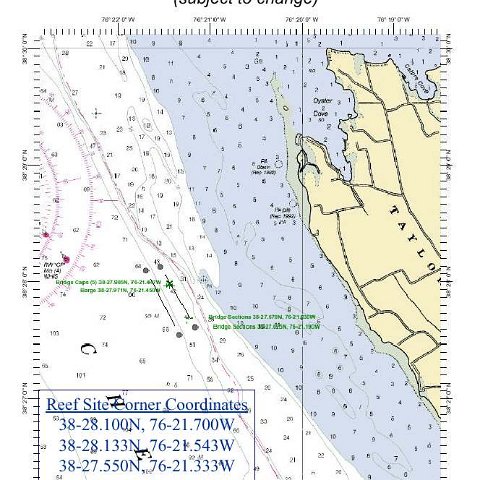
taylorislandreefsite
taylorislandreefsite  |  Total images: 2
talbotcountyCCA
talbotcountyCCA  |  Total images: 1
swancreekmitigationproject
swancreekmitigationproject  |  Total images: 4
somersetoysterreef
somersetoysterreef  |  Total images: 1
ScotchtownHills
ScotchtownHills  |  Total images: 1
SandyCreekRestoration
SandyCreekRestoration  |  Total images: 1
pasedena
pasedena  |  Total images: 16
OysterSpatSettledReefBalls
OysterSpatSettledReefBalls  |  Total images: 1
news
news  |  Total images: 1
MESMonitoringAssessmentReport0806
MES Monitoring Assessement Report for Oysters.  |  Total images: 1
One of the best places to start if you are interested in using Reef Balls for oyster reefs.
MESAllReefBallCoordinates1997to2007
MESAllReefBallCoordinates1997to2007  |  Total images: 1
marylandsaltwatersportfishermenassociationprojects
marylandsaltwatersportfishermenassociationprojects  |  Total images: 7
MagothyRiverAssociationReefBallProject
Magothy River Association (MRA) Reef Ball Project Photos  |  Total images: 5
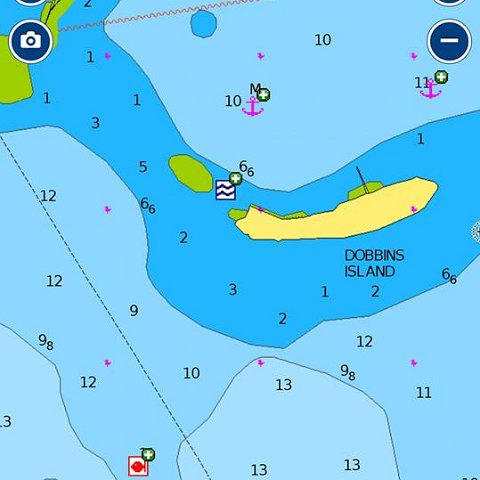
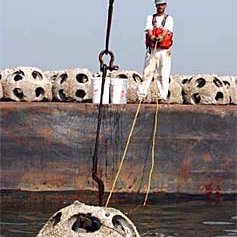
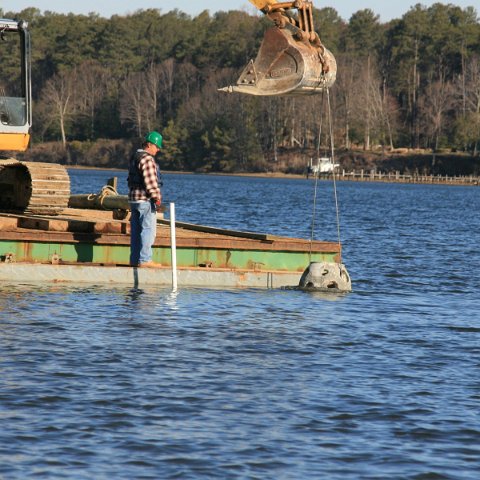
Magothy River Association (MRA) Reef Ball Project: On Oct. 12 and 13, 2004, 110 Reef Balls were deployed at two oyster sanctuaries; Rock Point and Dobbins Island, in the Magothy River, Ann Arundel County, Md. Deployment was by Ocean Outfitters of Maryland. This was a joint project with MES and MRA with grant support. MRA also had support from and coordinated with DNR. The staging area was at Cypress Marina, whose owner provided in-kind services for unloading, loading and storage of the Reef Balls prior to deployment. MES also organized and funded two local pours of Reef Balls with volunteers from the MRA. The Abell Foundation partially funded this project and assistance was obtained from Assocation with the Chesapeak Bay Trust.
horseheadreefsite
horseheadreefsite  |  Total images: 0
HollicuttsNooseReefSite
Hollicutts Noose Reef Site Project Photos  |  Total images: 227
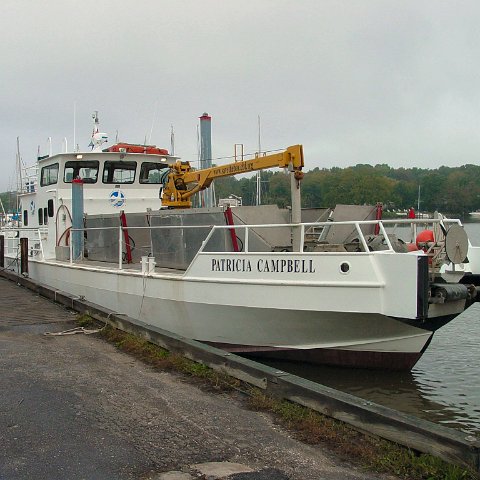
Hollicutts Noose Reef Site: The Constellation Energy grant partially funded placement of 32 Reef Balls at the Hollicutts Noose artificial reef site in Eastern Bay, Queen Anne?s County, Md. on October 14, 2004. This placement was done in partnership with the Chesapeake Bay Foundation (CBF). CBF staff and volunteers help produce the Reef Balls and the CBF vessel Patricia Campbell and crew assisted in the deployment of the Reef Balls.
hollandptreefsite
hollandptreefsite  |  Total images: 1
goodsonreefballproject
The Goodson Family Reef Ball Story  |  Total images: 1
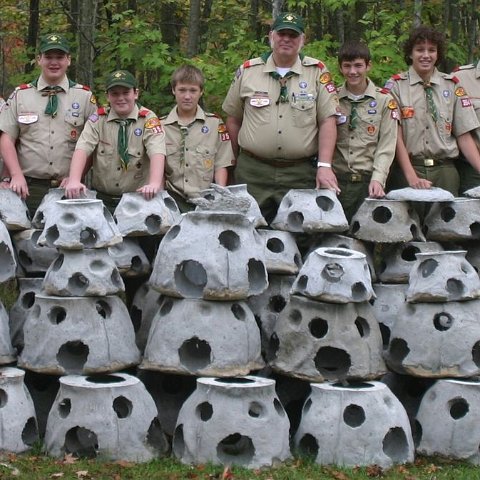
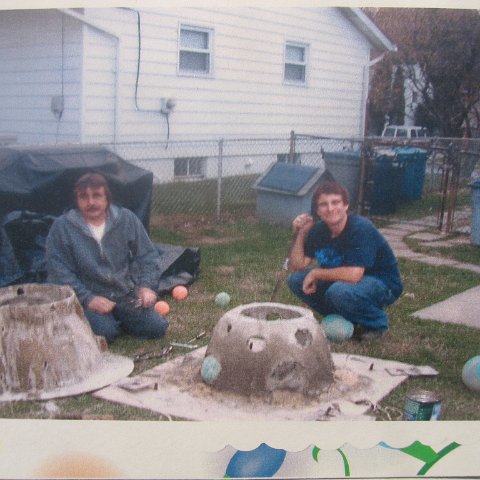
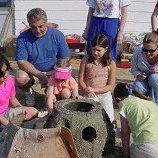
Scott Goodson learned about Reef Balls from his science teacher, Dennis Knabb. Dennis teaches students how to build LoPro sized Reef Balls at Parkville Middle School in Baltimore County. Two years later, Scott decided to build Reef Balls as a Scout project. Following a hands-on demonstration lesson, he constructed 6 Reef Balls. His mother, Kathy, took the picture of Scott and his dad with the Reef Ball in the forground and created a christmas card that included the following insert:

"This is what God asks of you, only this, to act justly, to love tenderly and to walk humbly with your God."

Kathy has survived cancer for six years and once again is undergoing therapy. I found out about this while having tea and cookies in her kitchen on the day a friend and I went to pick up the completed Reef Balls. Only then did I notice her wig. Her attitude was remarkable. She spoke in positive terms with much enthusiam. Because of my involvement with the Reef Ball project, I have had the opportunity to meet many truly caring persons, but Kathy tops the list. I cried when I read her card.

-Bill Huppert, MSSA
Dundalk
Dundalk  |  Total images: 1
discoveryvillageproject
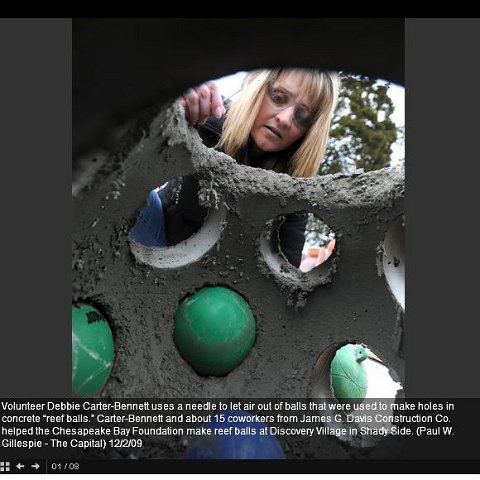
discoveryvillageproject  |  Total images: 4
covepointgasdocks
covepointgasdocks  |  Total images: 1
coorindatesfiles
coorindatesfiles  |  Total images: 1
Page 1 of 2 Next page


All images are copyrighted 1993-2007 (C) by Reef Ball Foundation, Inc. and by the original photographers. High resolution versions of most newer images are available by emailing your request to reefball@reefball.com. (please provide the URL of the photo requested) Use of images requires a link to www.reefball.org crediting Reef Ball Foundation as the photo source. Please email any photos you have with Reef Ball images to us and we will post in this photo database. Please indicate if you are freely sharing the photos or wish to retain your original copyrights and we will note that when posted.