Reef Ball Foundation Photos and Project Description Database


Only Search Reef Ball Photos and Project Database
Up one level Geographical Database for photos, videos, GPS Coordinates, news, and project descriptions. » Maryland Reef Ball Projects and Photos » Chesapeak Bay Environmental Center Reef Ball Project Photos

Chesapeak Bay Environmental Center Reef Ball Project Photos
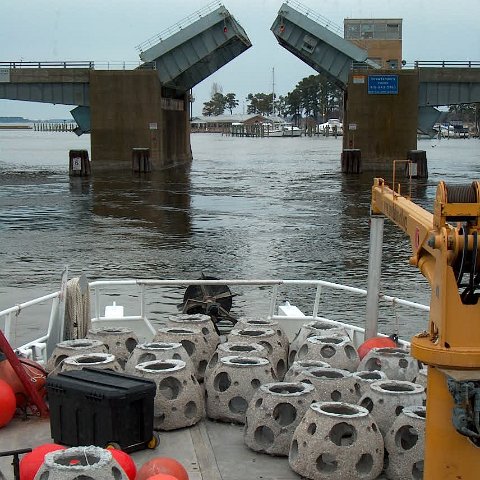
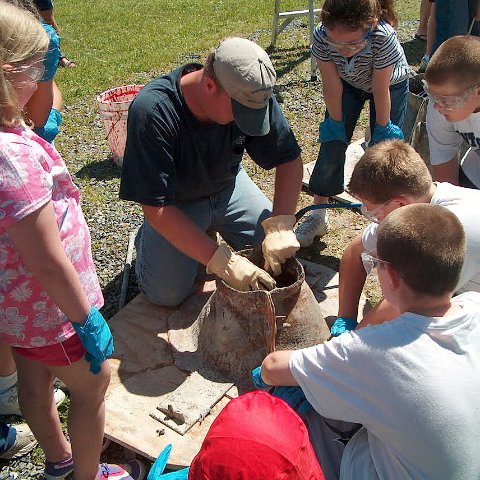
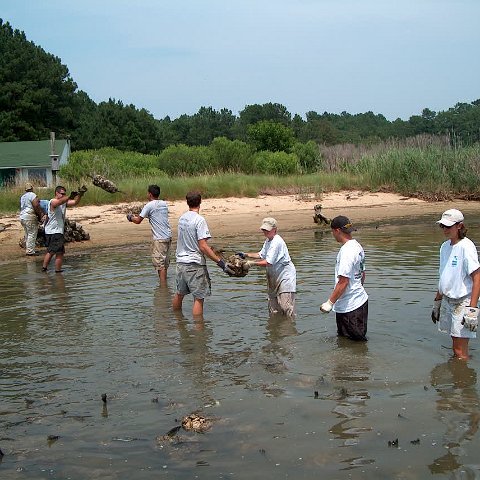
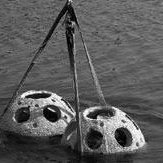
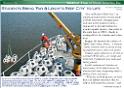
Twenty-five students from the ecology enrichment program at Kennard and Sudlersville Elementary Schools spent the entire school year exploring the ecosystem of a newly created oyster reef just offshore CBEC in the serene waters of Prospect Bay, near the base of the Bay Bridge. The new habitat area is built from specially constructed ?reef balls??large halves of hollow spheres, crafted from concrete and micro fibers that help organisms attach to the surface. The reef balls range from 250 to 400 pounds and are up to 3 feet high. Neat circular holes puncture the surface of the balls, providing passageways for fish and creating a look that CBEC visitors sometimes describe as a Swiss cheese ball or a concrete beehive. In March, CBEC worked with a number of partners, including the Maryland Environmental Service, Oyster Recovery Partnership, Langenfelder Marine Inc., Maryland DNR and the Chesapeake Bay Foundation, to deposit the reef balls into the water. ?We used 132 balls, arranged in clusters to mimic natural underwater topography,? Paulas said. GRASONVILLE - Volunteers from the Chesapeake Bay Environmental Center and Maryland Environmental Service staff members spent two and a half days last week pouring special marine-friendly concrete into molds, removing the molds like an eggshell and revealing reef balls. What is a reef ball? A reef ball is an artificial reef designed to create habitats for fish and other marine and freshwater species. The balls vary in size, have a dome shape and are hollow with several holes for aquatic creatures to use as a habitat. The reef ball project at the center has been funded by a $25,000 grant from the FishAmerica Foundation, the American Sportsfishing Association and the Chesapeake Bay Trust. The intent is to promote and support natural species diversification, as well as oyster and fish rehabilitation in the Cabin Creek area of the Chesapeake Bay.

Previous page At last page 33-40 (of 36 found)
40 7/12/05 6:38 AM

2005-JulyAugust-2586-img-3 Powered by Cold Fusion and CFX_IMAGE

Powered by Cold Fusion and CFX_IMAGE

2005-JulyAugust-2586-img-4 Powered by Cold Fusion and CFX_IMAGE

Powered by Cold Fusion and CFX_IMAGE

rbfprojectoftheyear

sudlersvilleenementaryschoolproject
Explore this folder
Sudlersville Elementary School Reef Ball Project  |  Total images: 1
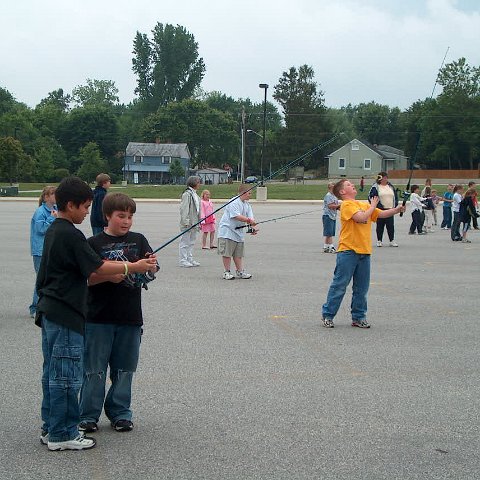
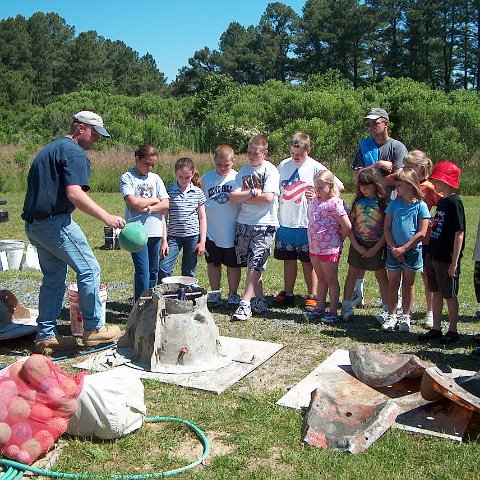
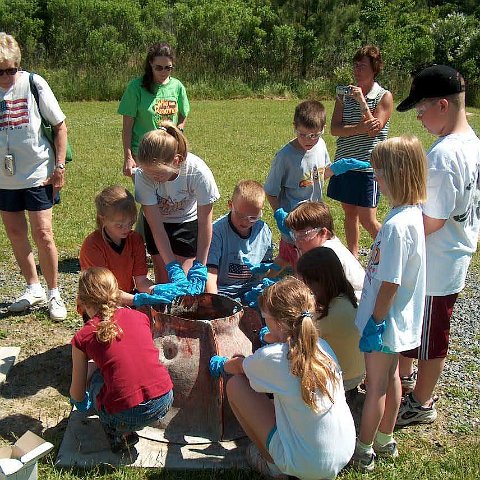
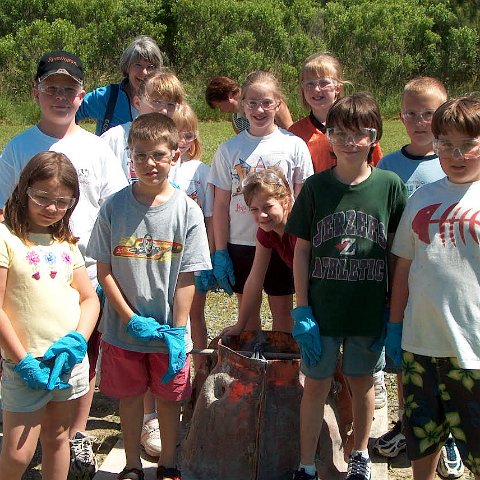
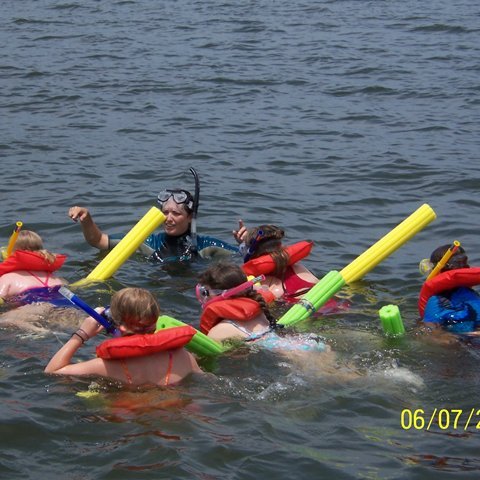
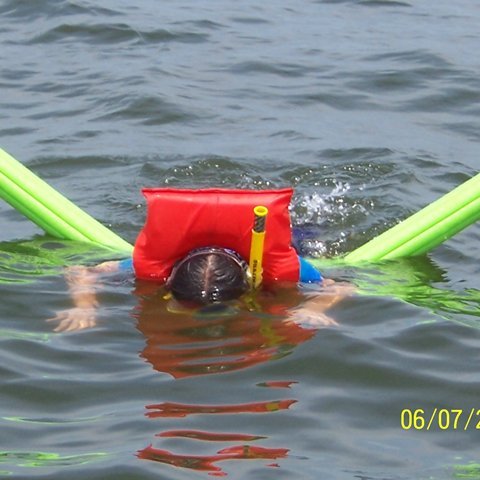
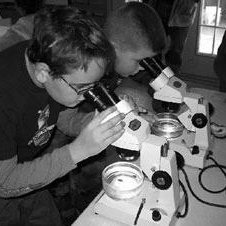
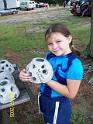
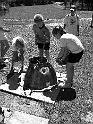
Elementary students having a ball participating in reef project Font Size: | | Tools: Images: (Click thumbnails for full-size image) See Also: Can Bay?s oysters make a comeback? Corps of Engineers may get more restoration projects, scrutiny Bay region leads nation in stream restoration but lags in monitoring By Lara Lutz School may be out for the summer, but some Eastern Shore elementary students have decided that class will continue at the Chesapeake Bay Environmental Center. Twenty-five students from the ecology enrichment program at Kennard and Sudlersville Elementary Schools spent the entire school year exploring the ecosystem of a newly created oyster reef just offshore CBEC in the serene waters of Prospect Bay, near the base of the Bay Bridge. Although the ecology program officially ended with the school year, many of those students weren?t ready to quit. ?The students were so excited about the whole project that they just couldn?t get enough of it,? said Alison Vooris, a teacher and program supervisor at Sudlersville Elementary. ?Being included in real scientific research meant a lot to them. They wanted more opportunities to really see the difference the reef was making.? As a result, about half of the students are returning throughout the summer to continue monitoring the reef. ?The kids were really excited about seeing pieces of Bay life up close and in the water,? said CBEC restoration manager Vicki Paulas. ?They?re seeing it work in the actual environment, not in a tank or a slide on a screen.? The enthusiasm of these third, fourth and fifth-grade students has even rallied parents to take part in the discoveries at CBEC. CBEC is a bustling center of education, restoration and recreational activity situated on 510 acres of forest, beaches, meadows and wetlands in Queen Anne?s County. The site draws on a rich variety of habitat settings to showcase aquatic research and watershed management tools, while cultivating hands-on involvement from toddlers to professional scientists and everyone in between. In 2004, Maryland Gov. Robert Ehrlich named CBEC a Bay Restoration Demonstration Site, with ongoing support from the Maryland Department of Natural Resources. This year?s oyster reef project complements earlier efforts in Prospect Bay to stabilize the shoreline and increase habitat features on land and underwater. ?The primary goal of the reef project is to increase sport fish populations by creating refuge for both juvenile sport fish and bait fish,? Paulas said. A $25,000 grant from the Chesapeake Bay Trust and the FishAmerica Foundation funded both the restoration and educational components of the project. The new habitat area is built from specially constructed ?reef balls??large halves of hollow spheres, crafted from concrete and micro fibers that help organisms attach to the surface. The reef balls range from 250 to 400 pounds and are up to 3 feet high. Neat circular holes puncture the surface of the balls, providing passageways for fish and creating a look that CBEC visitors sometimes describe as a Swiss cheese ball or a concrete beehive. In March, CBEC worked with a number of partners, including the Maryland Environmental Service, Oyster Recovery Partnership, Langenfelder Marine Inc., Maryland DNR and the Chesapeake Bay Foundation, to deposit the reef balls into the water. ?We used 132 balls, arranged in clusters to mimic natural underwater topography,? Paulas said. About half of the reef is sitting on 120 cubic yards of oyster shells. The shells were deposited to form a hard base that would attract natural spat and support the half-million oyster spat added to the reef in July. Students were enlisted to help make the reef balls and bag oyster shells for its base. Then they monitored the outcome by exploring the reef underwater. Student enthusiasm for this project was a year in the making. Paulas, Vooris, and Lee Franklin of Kennard Elementary teamed up to create a Bay curriculum that combined classroom studies with hands-on, outdoor activities. Paulas directed the field work and provided classroom instruction at the schools at least once a month. Experts from the National Oceanic and Atmospheric Administration, Maryland Environmental Service, Maryland Sea Grant Extension Program and Oyster Recovery Partnership provided guest instruction. ?We used mini reef balls in classroom tanks to study critters and compare water quality,? Paulas said. ?We also taught the kids to read tides. We dissected oysters and identified underwater grasses. We taught them about the life cycles of Bay organisms and, especially, how they all connect.? A cross-disciplinary mix of language, art, math and history was woven into the curriculum. Vooris says this has enriched the students? understanding of the Bay ecosystem and developed other academic skills in the process. For example, the students reflected on their learning in waterproof journals and performed skits to show the roles of crabs, oysters and grasses. They calculated how many reef balls it would take to line the coast of Maryland. They explored the Bay?s history and the culture of its watermen. ?We even designed T-shirts with the theme of protecting the Bay and how this reef project would help,? Vooris said. ?We created displays in both schools with 3-D reef balls coming out of the wall, and made true-to-life representations of fish and other creatures likely to be on the reef.? When spring arrived, the work moved outside. ?We wanted to give the students a real life experience in what researchers do. You don?t just write a paper. You have to go out there and get right in it,? Paulas said. To prepare for field work, students learned outdoor skills such as fishing and kayaking, and practiced snorkeling in a nearby pool?skills used for more than recreation when students took to the water in May. ?The kids put on their snorkels and went right in,? Paulas said. ?The reef had only been there for two months, and already they were seeing striped bass and small schools of fish. They looked at which grasses were growing and how the reef balls had settled. They were very observant and asked lots of questions.? The students made multiple visits to monitor the reef for fish populations, changes in vegetation and oyster recruitment. Monitoring will continue through the summer and contribute to ongoing data collection by CBEC staff. ?I don?t know of any other program where the kids are so aggressively involved with underwater monitoring,? Paulas said. She said that the data they collect will be used for comparison with other reef ball sites in the Bay, which average 12 feet deep. The CBEC reef site is unique because it stands in relatively shallow water, at a depth of five feet. According to Paulas, the educational component of the program has succeeded largely because of strong teacher leadership in the schools. ?They made it the theme for the year, and they didn?t drop the ball,? she said. Vooris pointed out that the students? parents were very supportive, driving their children to extra activities on evenings and weekends, and often coming along to participate. Vooris said, ?On the last day of school, more than one parent said to me, ?You do have our numbers, don?t you? We?ll be waiting for your call!??
newsletter
Explore this folder
newsletter  |  Total images: 1
KennardElememtarySchoolProject
Explore this folder
Kennard Elementary School Reef Ball Project  |  Total images: 11
An Eastern Shore elementary school ecology class and an alternative learning educator from Baltimore County shared top honors at the 29th annual Tawes Awards for a Clean Environment, presented recently in the Blue Heron Center at Quiet Waters Park in Annapolis. Nineteen students from the Kennard Elementary School Advanced Ecology Class and Gene Flanagan of the Rosedale Alternative Center won in the youth and adult categories respectively. The 4th and 5th grade students of the Kennard Elementary School Advanced Ecology Class (Queen Anne?s County) chose to be involved in ?extra-curricular? projects and assumed these added responsibilities with enthusiasm and energy, often working on weekends. Their projects included: the Reef Ball Ecology Project where students studied the animals and plants that live on reef balls in the Chesapeake Bay.
bayrestorationdemonstrationsite
Explore this folder
Governor Ehrlich Announces Establishment of Bay Restoration Demonstration Site  |  Total images: 0
Private-Public Partnership will Oversee Large-Scale Restoration Site
ANNAPOLIS, MD -- Governor Robert L. Ehrlich, Jr., today announced the establishment of the Bay Restoration Demonstration Site at the 500+ acre Chesapeake Bay Environmental Center (CBEC). This unique public-private partnership will showcase the cutting-edge components of Governor Ehrlich?s comprehensive plan to restore the Chesapeake Bay.
?This site will demonstrate that our three-point plan ? oyster restoration, bay grass replenishment and nutrient reduction ? can help restore the Bay to its rightful status a national treasure,? said Governor Ehrlich. ?There is much work to be done, but this demonstration site is a big step toward reaching that goal.?
The Chesapeake Bay Environmental Center, located on the Eastern Shore just over the Kent Narrows Bridge, was chosen as the State?s first comprehensive Bay restoration demonstration site because it very closely replicates the habitat, water quality and problems facing much of the Bay. It has a broad, diverse ecosystem close to major waterfront development and high-traffic boating corridors. Projects, which will be completed on site, will include: planting of cover crops and forest buffers to filter nutrients from runoff; installation of living shoreline control measures to prevent erosion and provide habitat for terrapins, nesting crabs, and other aquatic life vital to the Bay; placement of oyster reefs to encourage population growth; planting of bay grasses to produce oxygen and provide habitat for juvenile fish and crabs; installing state of the art septic systems and upgrading efficiency of a nearby wastewater treatment plant to reduce nutrients. The first major project currently underway is the planting of a five-acre oyster bed, reef ball placement and bay grass plantings. Dr. Torrey C. Brown, President of CBEC and former Secretary of DNR, explained, ?By joining forces with DNR and a host of other public and private entities, we will be able to create something that no one agency or organization could possibly do alone. The site will give legislators, scientists and the public the opportunity to see the future and what it will take to achieve our common goal of a healthy Chesapeake Bay.? The demonstration project will be run by the Department of Natural Resources and CBEC. Other project partners among others will include The Conservation Fund, Chesapeake Bay Trust, Chesapeake Bay Foundation, Oyster Recovery Partnership, Maryland Environmental Service and the Maryland Departments of Agriculture, Environment and Planning.


All images are copyrighted 1993-2007 (C) by Reef Ball Foundation, Inc. and by the original photographers. High resolution versions of most newer images are available by emailing your request to reefball@reefball.com. (please provide the URL of the photo requested) Use of images requires a link to www.reefball.org crediting Reef Ball Foundation as the photo source. Please email any photos you have with Reef Ball images to us and we will post in this photo database. Please indicate if you are freely sharing the photos or wish to retain your original copyrights and we will note that when posted.