Geographical Database for photos, videos, GPS Coordinates, news, and project descriptions. » Florida Reef Ball Projects and Photos » East Coast Counties on the Atlantic Ocean (Jacksonville to Key West Including Offshore Oculina Banks) » stlucie
news
| Total images: 1
2007 Management Plan calls for...
Artificial Habitat Creation:
Oysters are a vital species in achieving restoration of the estuary. They are a key indicator of the health of the system and are also very effective biofilters of fine sediments and nutrients in the water column. The recommended plan includes creating additional oyster habitat area. This habitat area is
essential because it aids in the restoration process by providing a location for oyster larvae to settle and by providing habitat for other species. Six sites in the middle estuary have been identified. Each site will be approximately 15 acres in
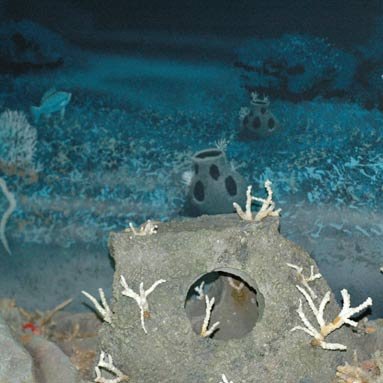
area and will include 10 acres of shell hash, 4 acres of prefabricated 2-foot diameter concrete reef balls and 1 acre of seagrass. A total of 90 acres of artificial habitat will be created via this means: 60 acres of oyster shell hash, 24 acres of prefabricated reef balls, and 6 acres of artificial submerged aquatic vegetation.
North Causeway Island Reef Ball Projec
| Total images: 3
The county plans to use oyster-filled Reefballs over Enteromorpha at the North Causeway Island with the goal to producen a net gain in Essential Fish Habitat. St. Lucie County intends to put Reefballs in intertidal areas at the North Causeway Island and fill them to varying heights with oyster shell (to increase habitat variability).
The algae surrounding the North Causeway shoreline has been positively
identified as Enteromorpha, not Ulva. While Enteromorpha is not
free-floating, it is held in place by a holdfast rather than a root. It is
an opportunistic species used as an indicator of highly eutrophic waters.
Because its holdfast does not extract nutrients from the sediments,
Enteromorpha is capable of colonizing other surfaces (i.e. rocks, mangrove
roots, wood). Placement of reefballs in the intertidal zone will be rapidly
colonized by Enteromorpha, which is capable of withstanding tidal
fluctuations, resulting in no net loss of the functions and values of the
algal community.
Placement of the reefballs, along with oyster shell, and possibly mangroves
will not only add additional EFH, but stabilize sediments beyond the
capability of Enteromorpha alone. The species richness developed in our test
modules (mesh bags filled with oyster shell) will also contribute to
ecosystem stability as oyster shell will be placed inside the reefballs.
Live oysters have been observed growing on red mangrove prop roots in nearby
areas. Reefballs will be used to test whether adding intertidal profile will
enable colonization of oysters. The addition of a profiled substrate may
also make measurement of vertical growth of oyster colonies easier to
document.
Location:
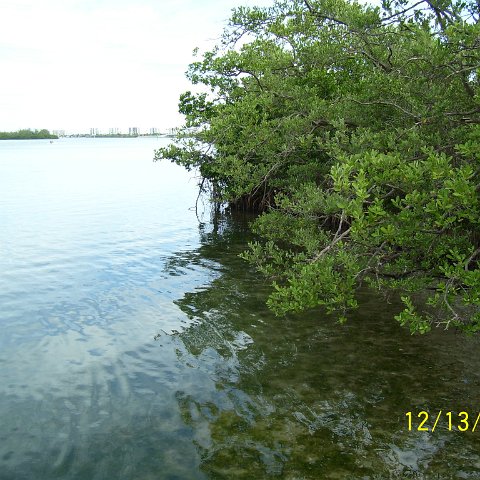
St. Lucie County may be applying for permits to place Reefballs near the shoreline along the North Causeway Island (see oyster module location map -station 9) in Fort Pierce. There is a public finger pier in this area that was constructed by the County; we hope to apply to put Reefballs under this pier as well.
All images are copyrighted 1993-2007 (C) by Reef Ball Foundation, Inc. and by the original photographers. High resolution versions of most newer images are available by emailing your request
to reefball@reefball.com. (please provide the URL of the photo requested) Use of images requires a link to www.reefball.org crediting Reef Ball Foundation as the photo source. Please email any photos
you have with Reef Ball images to us and we will post in this photo database. Please indicate if you are freely sharing the photos or wish to retain your original copyrights and we will note that when posted.