Reef Ball Foundation Photos and Project Description Database


Only Search Reef Ball Photos and Project Database
Up one level Geographical Database for photos, videos, GPS Coordinates, news, and project descriptions. » Barbados Reef Ball Projects and Photos » Barbados Marine Trust Projects

Barbados Marine Trust Projects
james blades jamesblades@caribsurf.com>

aerials
Explore this folder
aerials  |  Total images: 101
amaryllisbeachresort
Explore this folder
Amarylis Beach Resort Reef Ball Project  |  Total images: 1
Amaryllis is also a member of the Barbados Marine Trust, an organisation dedicated to promoting environmentally and socially-sustainable use of the Marine areas of Barbados. The Trust plays a major role in assisting the Government of Barbados in the implementation of marine management initiatives. Protecting our reefs ensures that our economy, community, and the livelihoods of our people are sustained. The Trust intends to implement a long-term plan, which will enable us to educate the population in particular our children on the importance of, and need for a permanent policy for the future of our marine resources. We have embarked on a Reef Ball project. The main objectives of the project are: To improve the marine environment for present and future generations and in particular to increase the biodiversity in the area To improve the species variety and population density of all marine life, fish, corals sponges etc. in the area To use local knowledge and experience to restore the ailing marine environment in the most cost effective manner. The ecological enhancement of the area. To mimic the natural environment in an area which is the least polluted in Barbados. To create an environment which will enhance the Food Fish population of the area. To create an awareness of the marine environment and to use the local Fishing Community /Diving /Dive Boat/ Cruise Operators/ Pleasure Craft operators/ Water Sports Operators/Hotels/ as Reef Police to ensure the success of the project. To use this project as a means of monitoring reef development for future generations.
astabeachresortproject
Explore this folder
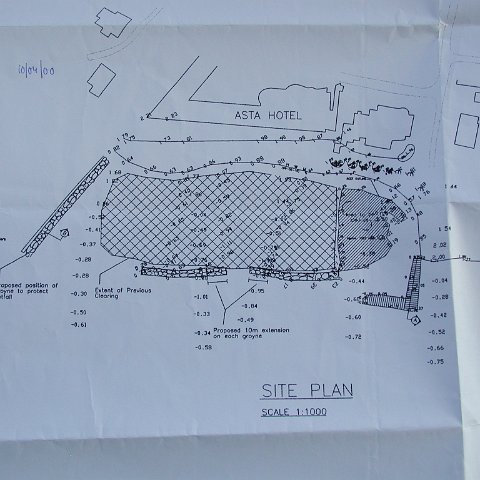
Asta Beach Resort Reef Ball Project  |  Total images: 1
Asta is also a member of the Barbados Marine Trust, an organisation dedicated to promoting environmentally and socially-sustainable use of the Marine areas of Barbados. The Trust plays a major role in assisting the Government of Barbados in the implementation of marine management initiatives. Protecting our reefs ensures that our economy, community, and the livelihoods of our people are sustained. The Trust intends to implement a long-term plan, which will enable us to educate the population in particular our children on the importance of, and need for a permanent policy for the future of our marine resources. We have embarked on a Reef Ball project. The main objectives of the project are: To improve the marine environment for present and future generations and in particular to increase the biodiversity in the area. To improve the species variety and population density of all marine life, fish, corals sponges etc. in the area. To use local knowledge and experience to restore the ailing marine environment in the most cost effective manner. The ecological enhancement of the area. To mimic the natural environment in an area which is the least polluted in Barbados. To create an environment which will enhance
breakwaterengineeringdrawings
Explore this folder
Barbados Marine Trust Reef Ball Submerged Breakwater Project  |  Total images: 2
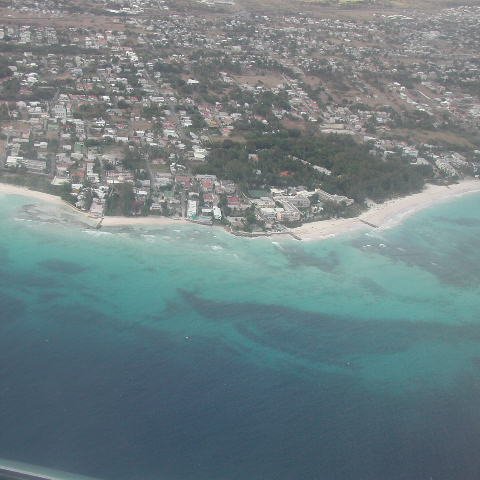
By next week, 30 reef balls will be strategically placed along the South Coast of Barbados in an effort to provide artificial housing for fish. They will also form a protective barrier for the coastline, in light of the damage caused by destructive waves particularly during the hurricane season. An initiative of the Barbados Marine Trust, the first phase of this $100 000 project was officially launched yesterday and according to co-ordinator of the project, Michael Webster, the balls will be placed on a site located between the Savannah and Amaryllis hotels in Christ Church. ?It is going to create a habitat not only for fish, but also lobsters and sea cats and we can actually custom design these reefs in the future to create exactly what we wish. Our vision is to have something not only beautiful, but sustainable fisheries as well.? Webster, also the director of the Marine Trust, explained that the area, which is virtually barren, was chosen since it is sandy and the placement of the 6 000 pound balls on already existing coral was to be avoided at all costs. He said that it is of critical importance that Barba-dians adopt a more proactive approach, especially when dealing with the conservation of our coasts, in light of extensive damage done during the hurricane season. Made by Preconco Ltd., the balls are created of coral stone, cement, silica sand and fibermesh. They include a gaping hole at the top to ensure that fish or turtles are not trapped inside. The co-ordinator explained that the project will be studied over the next 18 months by the University of the West Indies to gauge its success, and feasibility for similar projects in the future. Acknowledging the financial implications of placing the reef balls in areas most affected by coastal erosion and a decrease in fish populations, Webster added that the Marine Trust will be looking towards selling the reef forming balls to both tourists and locals. With one ball worth approximately $500. He said that not only would it create a sustainable eco-system, but would attract persons owning a ball to return to the site to gauge its progress. Furthermore, president of the Marine Trust, Peter Barrow, said that in addition to working with the Coastal Zone Management Unit and other stakeholders to ensure the proper management of the South Coast, a course in underwater archaeology is also being explored in the near future. While the project was delayed pending permission from the Town and Country Planning Department?s official approval, Webster thanked all the stakeholders for seeing this project to fruition. These include the Fisheries Department, the Harbour Master, the National Conservation Commission, James Blades and Charles Blades
construction
Explore this folder
construction  |  Total images: 16
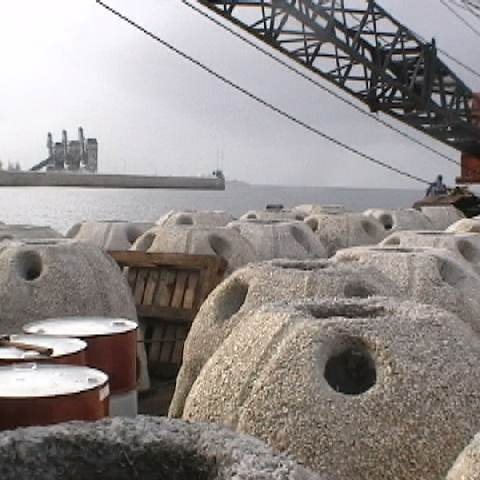
Construction of Reef Balls in Barbados June 2003.
deployment
Explore this folder
Willard King Reef Ball Site  |  Total images: 1
drharrisvisitstewartsproject
Explore this folder
drharrisvisitstewartsproject  |  Total images: 1
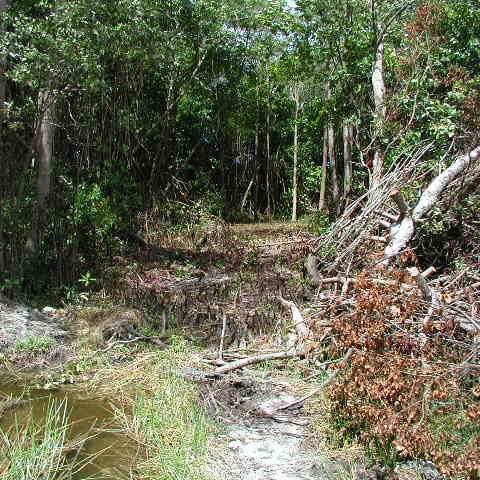
mangroverestoration
Explore this folder
mangroverestoration  |  Total images: 47
map
Explore this folder
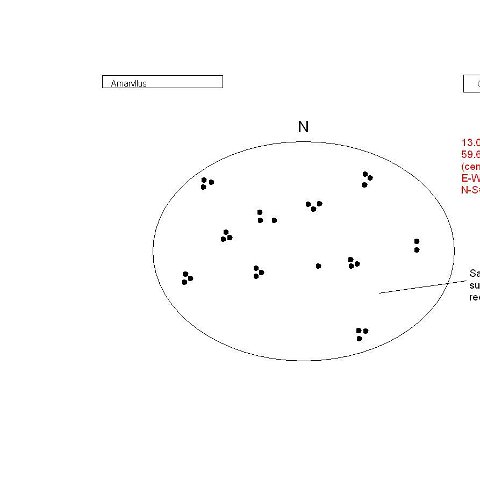
map  |  Total images: 1
meetings
Explore this folder
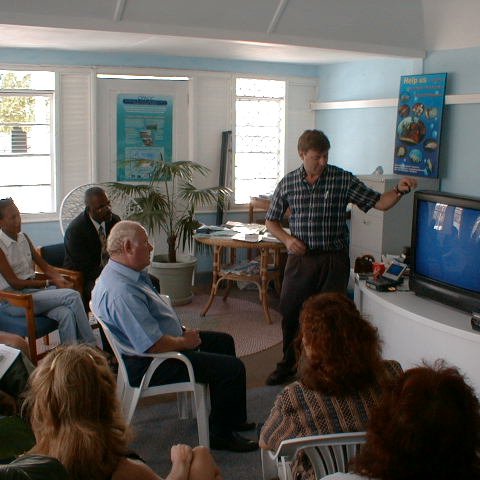
meetings  |  Total images: 4
monitoring
Explore this folder
Reef Ball Report July 2005  |  Total images: 37
Over the last three decades, development activities along the West and South coasts of Barbados have been linked to a decline in the abundance and diversity of both the bank and fringing reefs around the island. Management and monitoring activities by the Coastal Zone Management Unit (CZMU) have served to reduce the negative effects of coastal developments on marine communities. In an effort to supplement these Government activities, in July 2004, the Barbados Marine Trust (BMT) implemented the Reef Ball Pilot Project (first of its kind in Barbados)), which involved the deployment of thirty (30) reef balls off Hastings. Reef Balls are a new category of reef enhancement called, "Designed Reefs." They are made of a special, marine friendly concrete and are designed to mimic natural reef systems. Reef balls are used around the world to create habitats for fish and other marine and freshwater species. According to stipulations by the CZMU, the reef balls were deployed in the middle of a sand channel of which the southward boundary was a soft coral dominated patch reef. The outer section of the sand channel terminated at the base of Barbados? cohesive south coast bank reef. Baseline fish surveys were carried out at the exact location selected for the placement of the reef balls and at a control site prior to the placement of the reef ball structures on the seabed. Since their deployment, the reef balls and three (3) control sites were monitored on six (6) occasions by research divers primarily to observe and record the rate of coral recruitment on the reef balls over time and to observe and quantify fish migration to the artificial reef site. After the reef balls were deployed, fish abundance at the experimental site was observed to have doubled in less than one month. Additionally, fish diversity increased three-fold in the same period. It was noted that both adult and juvenile fish contributed to this increase. There appeared to be a low degree of migration of mature fish from the natural reefs but the impact on these reefs appeared to be negligible. Though observations are preliminary, evidence appears to indicate that migrant fish may be starting to reproduce at the reef ball site, thereby increasing fish abundance independently of the surrounding natural reefs. This can be seen by the eggs of fish species found on the reef balls. There has also been significant coral recruitment at the reef ball site. Of 4 of the reefballs sampled, all had >860 coral recruits (of 3 or more species) and one single reef ball had over 100 coral recruits. On September 9, 2005, two months after the reef balls were deployed, the eye of Hurricane Ivan, a Category 4 hurricane, passed approximately 80 miles south of Barbados. The hurricane caused powerful waves to slam the south coast of Barbados, resulting in damage to many fringing, patch and bank reefs, as well as man-made coastal defense structures. Shortly after the passage of the hurricane, fish abundance at the reef ball site had returned to the pre-deployment levels when the area was dominated by coralline sand. However, during the four (4) months following the hurricane, abundance once again began to show an increase. By early 2005, fish abundance was approximately five (5) times higher than they were immediately after Ivan had passed. Monitoring of the Reef Ball Pilot Project will continue until September 2005, which will provide eighteen (18) months of continuous data. Results will advise the BMT of the effectiveness of reef balls as fish attracting devices. A continuous effort will also be made to assess any potential impacts of the reef balls on surrounding natural reefs. Upon conclusion of the analysis of the data obtained from the Pilot Project, the BMT will prepare a White Paper which will advise and direct the Government of Barbados and the BMT on the future deployment of reef balls at other marine locations around the island. Possible sites under consideration by the BMT are Oistins, Carlisle Bay, Atlantis Submarine reef, Folkestone Marine Park and Cobblers Cove. 22-Jul-05
news
Explore this folder
news  |  Total images: 4
pressrelease
Explore this folder
pressrelease  |  Total images: 1
projectproposal
Explore this folder
projectproposal  |  Total images: 1
shoreline
Explore this folder
shoreline  |  Total images: 143
siteseeing
Explore this folder
siteseeing  |  Total images: 19
image1


All images are copyrighted 1993-2007 (C) by Reef Ball Foundation, Inc. and by the original photographers. High resolution versions of most newer images are available by emailing your request to reefball@reefball.com. (please provide the URL of the photo requested) Use of images requires a link to www.reefball.org crediting Reef Ball Foundation as the photo source. Please email any photos you have with Reef Ball images to us and we will post in this photo database. Please indicate if you are freely sharing the photos or wish to retain your original copyrights and we will note that when posted.