Geographical Database for photos, videos, GPS Coordinates, news, and project descriptions. » Australia Reef Ball Projects and Photos » Peel Region Canal Habitat Enhancement Program Photos
Western Australia has successfully commenced Australias first canal habitat enhancement program, pushing the boundaries of canal design.
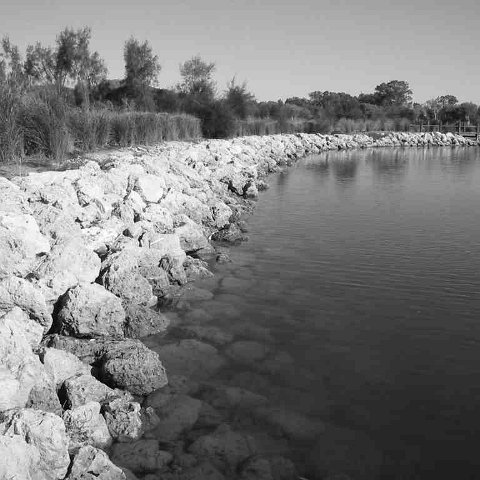
Canal estates in coastal areas rank among the most controversial of modern developments. Our historic disregard for smelly coastal swamps and their valuable role in nature has led to their replacement with more useful canal dwellings. We build and we learn - and now realise the error of our ways. Tighter regulations and better engineering now mean more environmentally thoughtful canals.
We have recently reached significant milestones in the evolution of canal estate design with the inclusion of environmentally sensitive features. The purpose built migratory wader bird roosts at Bribie Islands (Qld) Pacific Harbour and the award winning preservation of wetlands at Mariners Cove (WA) are two good examples. We are now thinking outside the square and including the very natural qualities that attract many to the coast.
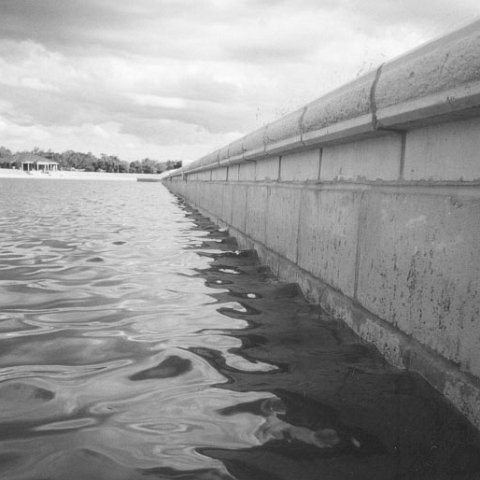
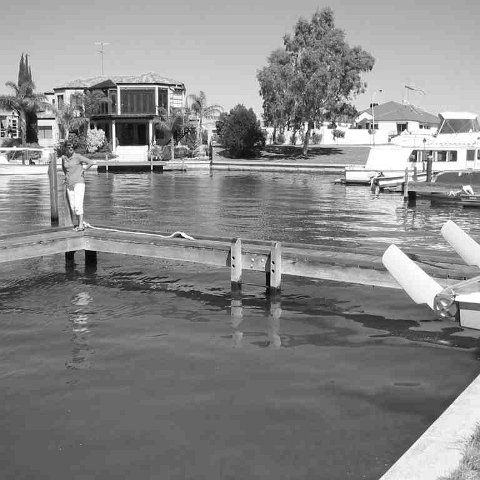
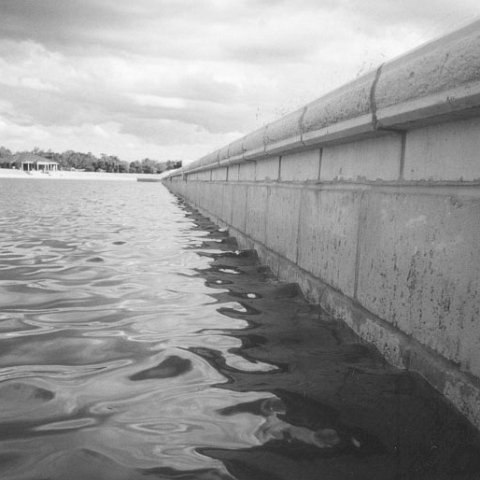
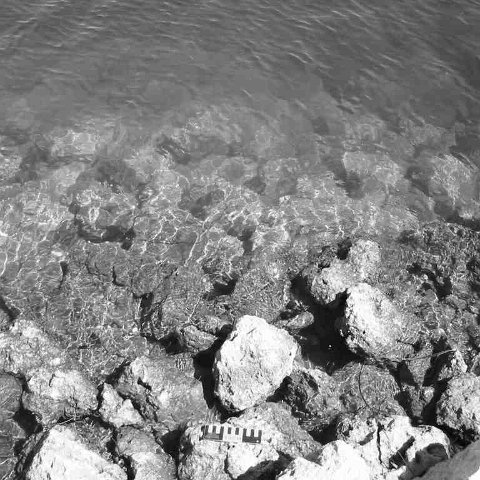
Yet we are still focused above the waterline and overlooking what lies beneath, which in the natural environment is intrinsically connected to what lies above. The next step in the evolution of the canal estate is to replace the impressive collection of straight, smooth walls and bottoms of canals with an environment that encourages a diversity of marine life. And if we retain natural wetlands or include purpose built natural areas, we need to remember that efforts may be wasted if adjacent aquatic habitat is inadequate to support the transfer of productivity.
There are three key methods of adding complexity and varied habitat: changing canal wall configuration, using alternative wall materials, and adding specifically designed concrete reef modules.
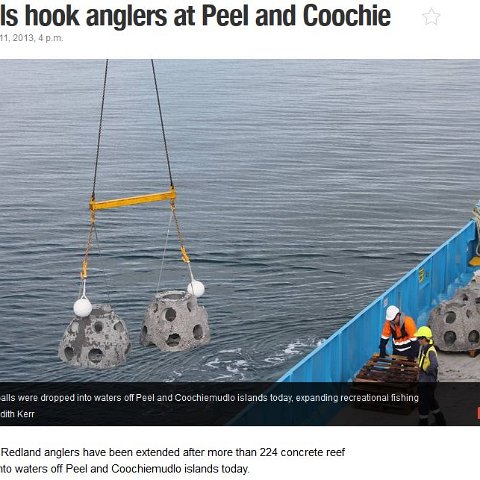
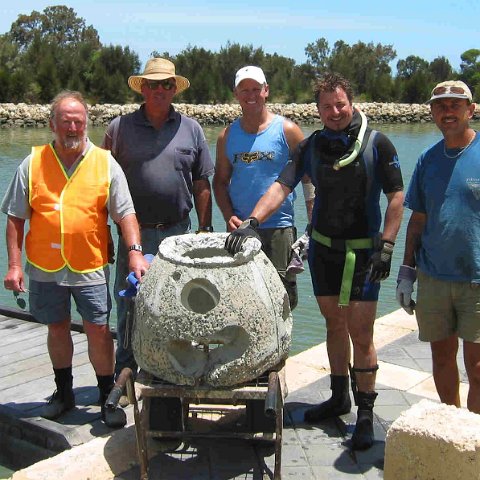
Two canal estates in the Peel region of WA have chosen the latter and are deploying concrete artificial reef modules known as Reef Balls in their canals. Reef Balls are a patented hollow dome shaped module with numerous holes and complex surface texture, specifically designed to support marine life.
Their addition to the base of canal walls or under jetties adds significantly greater useable width and shelter that marine life can utilise to live and breed. They can also provide the added benefit of helping attenuate boat wash which can be magnified within canals.
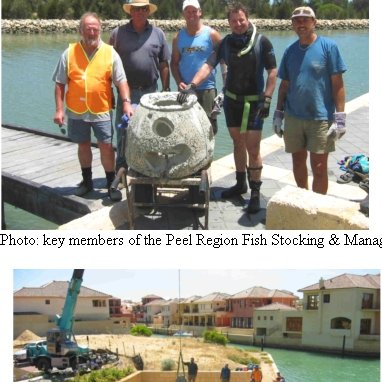
Over 500,000 Reef Balls have now been deployed around the world but never before within Australian canals. The modules are being produced from imported moulds by not-for-profit group, Peel Region Fish Stocking & Management Association with funding provided by Port Bouvard Ltd, Cedar Woods Properties Ltd and Peel Development Commission. Volunteers underwent training in Reef Ball manufacture and deployment and have successfully deployed 40 modules in the canal estate. The group will monitor the effectiveness of the modules and expand the program in the future.
This is the beginning of a new era in canal design. With just a little extra thought and very few extra dollars, canals can become diverse communities and productive ecosystems that support local fisheries and increase recreational and financial value for residents. Into the future coastal engineering may include environmentally sensitive design of coastal structures, such as rock breakwaters, canal walls and bridge pilings, as a natural evolution in our understanding of the way in which the built environment interacts with the natural environment.
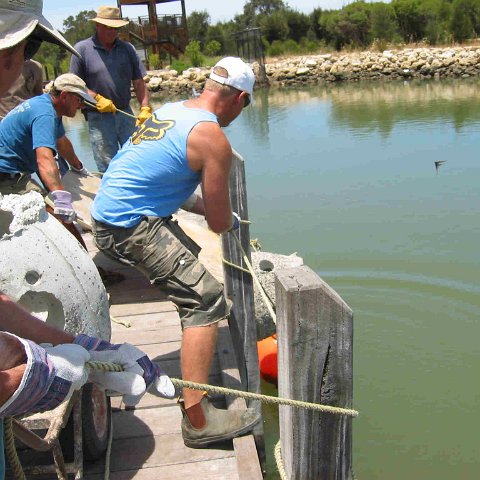
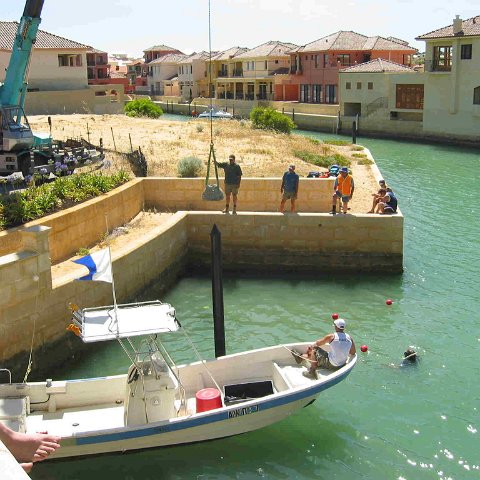
A PILOT project to enhance the marine environment of Mandurah's canal systems saw reefballs lowered into the water.
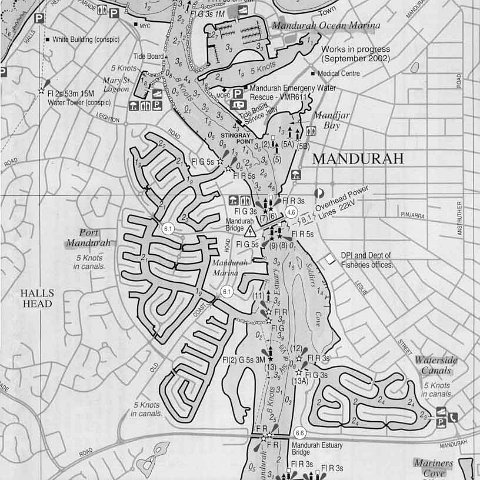
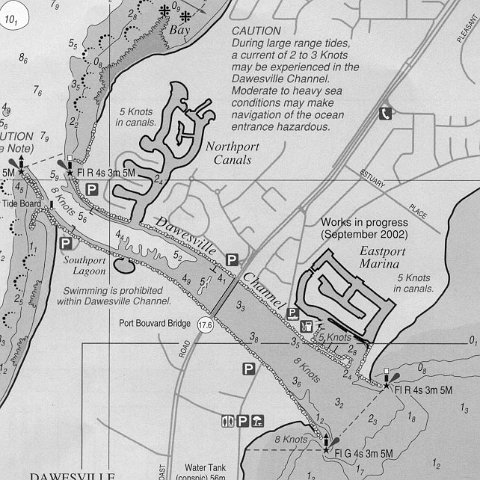
Twenty of the balls were lowered at Mariners Cove with five either side of the Island Bridge in Port Bouvard.
Consultant David Lennon who completed a report previously funded through the Peel Development Commission and Water and Rivers Commission visited from Melbourne to supervise the placement of the reef balls into the water.
The Peel Fish Stocking and Management Association initiated the reef balls project two years ago.
It has worked with local developers Cedar Woods Ltd and Port Bouvard Ltd, Peel Harvey Catchment Council, Water and Rivers Commission, community members and the Peel Development Commission to research the project, import the reef ball moulds and then work with local volunteers to produce the finished product.
A further 10 balls will be installed at the public swimming beach at Port Bouvard in the near future allowing snorkellers the opportunity to observe the marine life as it inhabits the reef balls.
Peel Fish Stocking and Management Association president Leon Hodge said the implementation of the reef balls went very well and was completed in one day.
"Monitoring by community and academic bodies will now occur to verify marine enhancement compared to similar areas without reef balls," Mr Hodge said.
Peel Fish Stocking and Management Association will monitor the project and will gradually involve other people.
Peel Development Commission chief executive officer Maree De Lacey said the reef ball project had the potential to play an important role in the environmental management on the impact of development within the Peel Waterways.
'The Commission was very pleased to join in partnership with the other stakeholders in this project that has a very professional group of people driving it," Ms Delacy said.
Further information on the reef ball project is available by contacting Nick Lukacs on 0403 463 996.