Reef Ball Foundation Photos and Project Description Database


Only Search Reef Ball Photos and Project Database
Up one level Geographical Database for photos, videos, GPS Coordinates, news, and project descriptions. » Australia Reef Ball Projects and Photos

Australia Reef Ball Projects and Photos
1. Southern Cross Project 2. Peel Region Project 3. NSW Project 4. Western Australia Scientific Project 5. Tazmania Project. Click here for World Mapping System Information on Australia

peelregion
Explore this folder
Peel Region Canal Habitat Enhancement Program Photos  |  Total images: 20
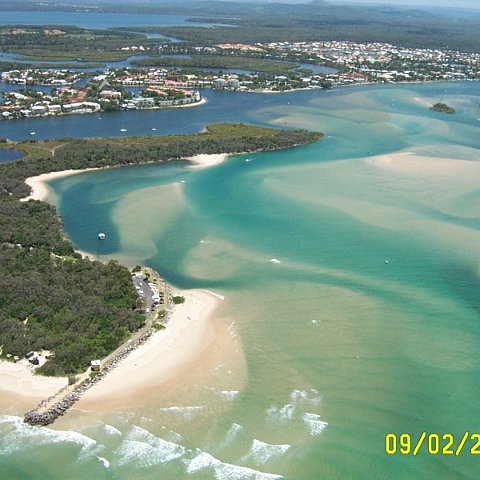
Western Australia has successfully commenced Australias first canal habitat enhancement program, pushing the boundaries of canal design.
Canal estates in coastal areas rank among the most controversial of modern developments. Our historic disregard for smelly coastal swamps and their valuable role in nature has led to their replacement with more useful canal dwellings. We build and we learn - and now realise the error of our ways. Tighter regulations and better engineering now mean more environmentally thoughtful canals.
We have recently reached significant milestones in the evolution of canal estate design with the inclusion of environmentally sensitive features. The purpose built migratory wader bird roosts at Bribie Islands (Qld) Pacific Harbour and the award winning preservation of wetlands at Mariners Cove (WA) are two good examples. We are now thinking outside the square and including the very natural qualities that attract many to the coast.
Yet we are still focused above the waterline and overlooking what lies beneath, which in the natural environment is intrinsically connected to what lies above. The next step in the evolution of the canal estate is to replace the impressive collection of straight, smooth walls and bottoms of canals with an environment that encourages a diversity of marine life. And if we retain natural wetlands or include purpose built natural areas, we need to remember that efforts may be wasted if adjacent aquatic habitat is inadequate to support the transfer of productivity.
There are three key methods of adding complexity and varied habitat: changing canal wall configuration, using alternative wall materials, and adding specifically designed concrete reef modules.
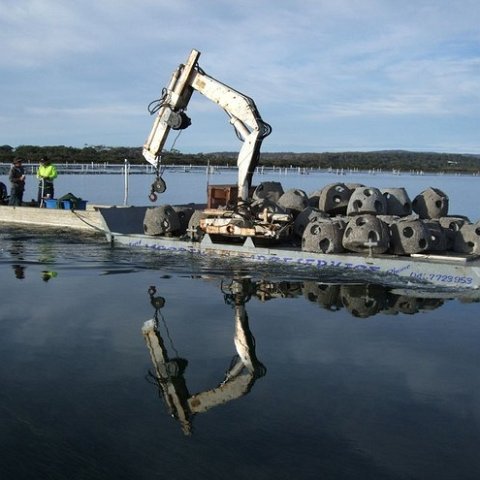
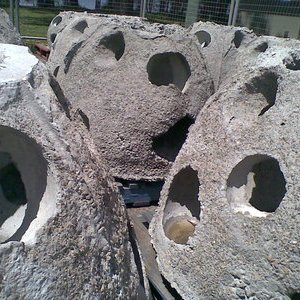
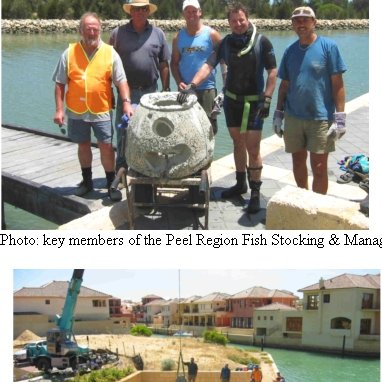
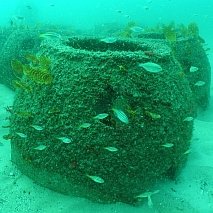
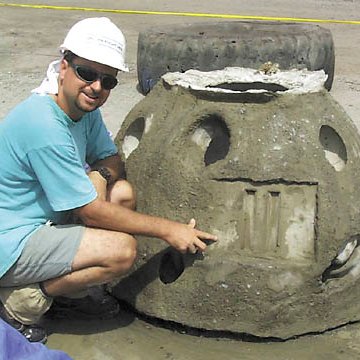
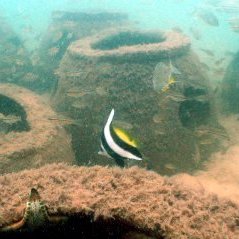
Two canal estates in the Peel region of WA have chosen the latter and are deploying concrete artificial reef modules known as Reef Balls in their canals. Reef Balls are a patented hollow dome shaped module with numerous holes and complex surface texture, specifically designed to support marine life.
Their addition to the base of canal walls or under jetties adds significantly greater useable width and shelter that marine life can utilise to live and breed. They can also provide the added benefit of helping attenuate boat wash which can be magnified within canals.
Over 500,000 Reef Balls have now been deployed around the world but never before within Australian canals. The modules are being produced from imported moulds by not-for-profit group, Peel Region Fish Stocking & Management Association with funding provided by Port Bouvard Ltd, Cedar Woods Properties Ltd and Peel Development Commission. Volunteers underwent training in Reef Ball manufacture and deployment and have successfully deployed 40 modules in the canal estate. The group will monitor the effectiveness of the modules and expand the program in the future.
This is the beginning of a new era in canal design. With just a little extra thought and very few extra dollars, canals can become diverse communities and productive ecosystems that support local fisheries and increase recreational and financial value for residents. Into the future coastal engineering may include environmentally sensitive design of coastal structures, such as rock breakwaters, canal walls and bridge pilings, as a natural evolution in our understanding of the way in which the built environment interacts with the natural environment.
newsouthwales
Explore this folder
NSW Department of Primary Industries Reef Ball Project Photos  |  Total images: 49
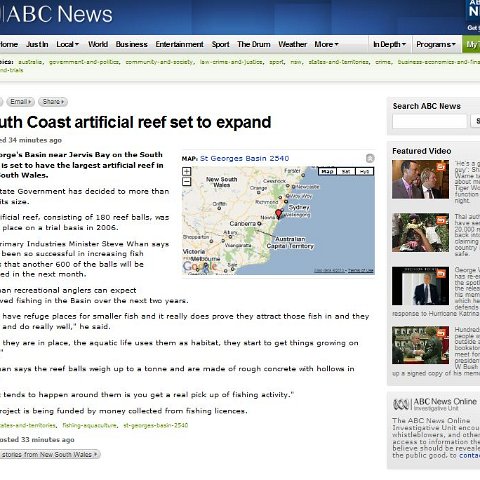
For the first time in NSW artificial reefs will be deployed into a recreational fishing haven in a bid to improve fishing conditions. NSW Department of Primary Industries (DPI), Manager Recreational Fisheries, John Diplock, said this is excellent news for recreational fishers in Lake Macquarie. ?The six small artificial reefs, which are made up of around 30 moulded concrete balls per reef, will today be deployed in the vicinity of Galgabba point on the eastern shore of Lake Macquarie. ?Reef balls are very popular with anglers throughout the world with about half a million deployed in many different countries. They are found to attract greater numbers of fish to the area and also provide protection for juveniles. ?The balls can easily be moved or removed completely if necessary,? Mr Diplock said. The Saltwater Recreational Fishing Trust has funded the project through the recreational fishing licence fee. ?Before the reefs could be deployed DPI was required to undertake scientific surveys of the sites and surrounding natural reefs in the lake. This information will be used to help form a comparison with the artificial reefs. ?Over the next two years the reefs will be monitored by video and divers to determine the species of fish, the size, when the fish are there and how long they stay for. ?Local recreational fishing clubs will also be asked to monitor their catches,? Mr Diplock said. In total 180 small reef balls will be deployed into the lake. The artificial reef project has received widespread support from Lake Macquarie City Council, the Concerned Anglers Group, anglers, the local community and the Boat Owners Association. The NSW Department of Primary Industries is undertaking a pilot Artificial Reefs project to investigate the benefits of artificial reefs as a fisheries enhancement tool in Recreational Fishing Havens (RFH) along the NSW coast. A series of small artificial reefs are being deployed in identified barren areas in three RFHs. The Department has worked closely with recreational fishers and estuarine user groups to establish suitable sites that will minimise social and environmental impacts. Before the reefs are deployed, a number of approvals are required from various Management Authorities. The reefs will be monitored before and after deployment using a combination of research methods including baited underwater videos, diver surveys and angler catch information. Lake Macquarie ? Galgabba Point Botany Bay ? pending approval St Georges Basin ? pending approval The Lake Macquarie, Botany Bay and St Georges Basin artificial reefs are being constructed using existing ?Reef Ball? technology. Reef balls are individual reef modules cast from a single mould. The Reef Ball modules are a patented mold supplied by the Reef Ball Development Group and are made from a special mix of concrete that enhances marine growth while withstanding saltwater corrosion. The Department is using ?Mini-Bay Reef Balls?, which when placed together on the bottom in varying numbers, form small artificial reefs of different sizes (see dimensions below). The individual reef ball modules create habitat for marine fish, algae and crustaceans and can be deployed, moved or retrieved if necessary. Reefs Balls have been used extensively around the world for a number of applications including natural reef enhancement, reef restoration, coastal stabalisation and fishing related development. Evidence to date suggests that Reef Balls can reach 80% or more of the natural species diversity and population densities of nearby natural reef systems within just a few years. Over 500,000 Reef Balls have been deployed worldwide in over 3,200 projects. Objectives Identify suitable sites for the construction of artificial reefs in 3 estuaries that have been declared Recreational Fishing Havens namely Lake Macquarie, Botany Bay and St. Georges Basin. Construct variable artificial reef configurations to establish best-suited designs for NSW estuaries to optimise effectiveness and minimise cost. Scientific research into artificial reef related topics. Inform the recreational fishing community about the effectiveness and contribution of artificial reefs in improving recreational fishing in each estuary. Establish guidelines for the consideration of any future artificial reef proposals in NSW estuarine and coastal waters.
tasmania
Explore this folder
Tasmaina: Levan Scuba Club Reef Ball Project  |  Total images: 15
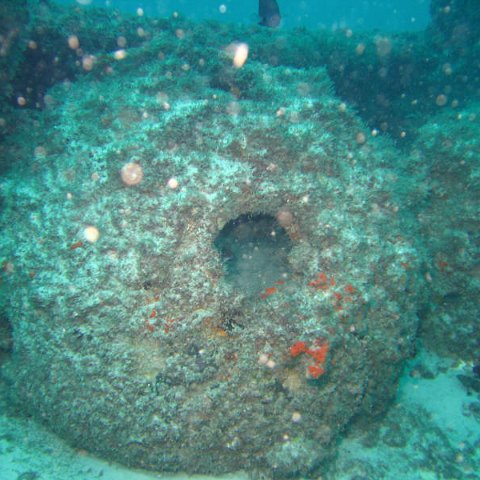
On 11th January, 2003 the club made their final deployment of Reef Balls to create a dive site. Subsequent monitoring photos show and excellent conversion to a reef. Background my name is Michael Reid, I live in Tasmania, Australia and am a member of the Leven Scuba Club which is based in Devonport. I have been in contact with and visited Dave Lennon in Queensland, Australia over two to three years regarding Reef Balls and have seen them made at his location. The club sank a wooden boat of 90 feet 4 years ago (after about 9 months of negotiations with the Government environment Department) and a year later I found your web site and became very interested in building an artificial marine habitat. The boat was sank in 30 meters of water on a sand bottom and 1 week later it had been colonised by a large school of rock cod (Lord only knows where they came from). Since then the boat has broken up but still holds a diverse selection of fish life. About two & a half years ago we began the process of applying for a Government subsidy to purchase a mould and other equipment to get us started. Well it now appears that we will get the grant and approval to start our little venture.
southerncrossproject
Explore this folder
Body Shop of Queensland Southern Cross Reef Project Photos  |  Total images: 5
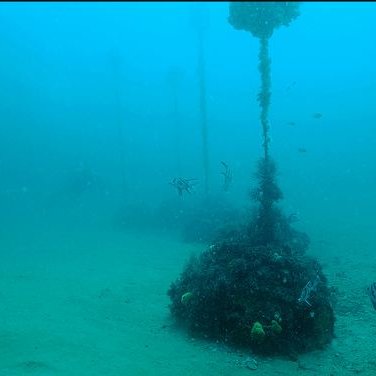
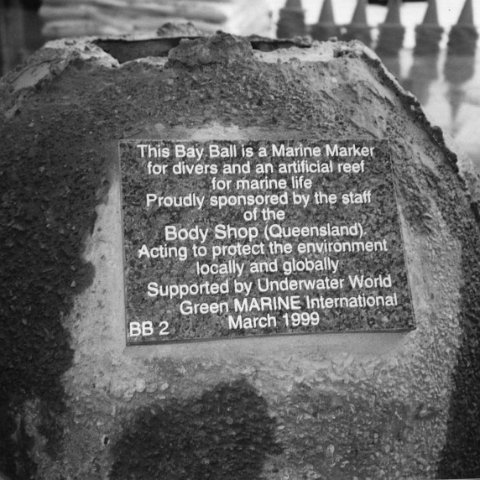
In March, 1999 the Body Shop of Queensland sponsors Reef Balls deployed in the shape of the Southern Cross (a constellation visable in the southern hemispher) along with Green Marine International to mark the first Reef Balls down under. Body Shop (international natural cosmetic franchise) has sponsored two Bay Balls to be added to the Southern Cross underwater trail off Mooloolaba (Queensland, Australia). This a combined sponsorship involving the Body Shop, Underwater World and Green MARINE International. Underwater World initiated the trail and has been a key player in raising sponsorship and providing boats and divers. Scheduled deployment is March 24, and the hit children's show, 'Totally Wild' will be there filming away. This is an initiative to protect local dive sites and increase awareness of the diversity of marine life in the area.
ptnewmont
Explore this folder
Green Marine Training of PT Newmont Project Photo  |  Total images: 2
Dave Lennon journeyed from Australia to indonesia to teach Reef Ball casting and deploying techniques he learn from his projects in Australia and traveling around the world assisting in Reef Ball Projects.
ar-banner-fish

bluehighway
Explore this folder
bluehighway  |  Total images: 2
curtinartificialreefstudy
Explore this folder
curtinartificialreefstudy  |  Total images: 3
greenmarine
Explore this folder
greenmarine  |  Total images: 3
sidney
Explore this folder
sidney  |  Total images: 1


All images are copyrighted 1993-2007 (C) by Reef Ball Foundation, Inc. and by the original photographers. High resolution versions of most newer images are available by emailing your request to reefball@reefball.com. (please provide the URL of the photo requested) Use of images requires a link to www.reefball.org crediting Reef Ball Foundation as the photo source. Please email any photos you have with Reef Ball images to us and we will post in this photo database. Please indicate if you are freely sharing the photos or wish to retain your original copyrights and we will note that when posted.