Geographical Database for photos, videos, GPS Coordinates, news, and project descriptions. » Turks and Caicos Reef Ball Projects and Photos
Sea Systems, a Reef Ball authorized contractor, is based in the Turks and Caicos and has conducted a variety of projects including a beautifully signed reef ball snorkeling trail, Coalition trips with UGA students and projects with LIving Classrooms.
Click here for World Mapping System Information on Turks and Caicos
Beaches Resort Turks and Caicos Reef Ball / Coral Planting Project
| Total images: 470
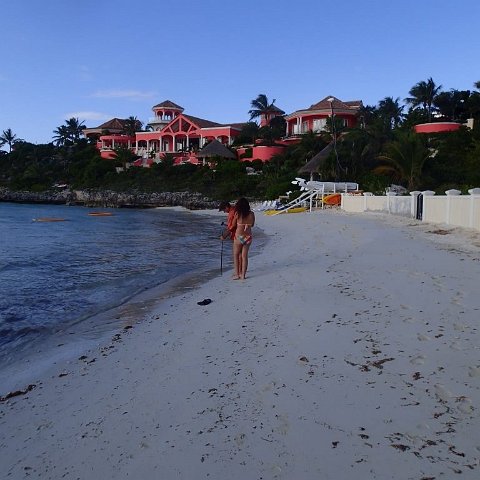
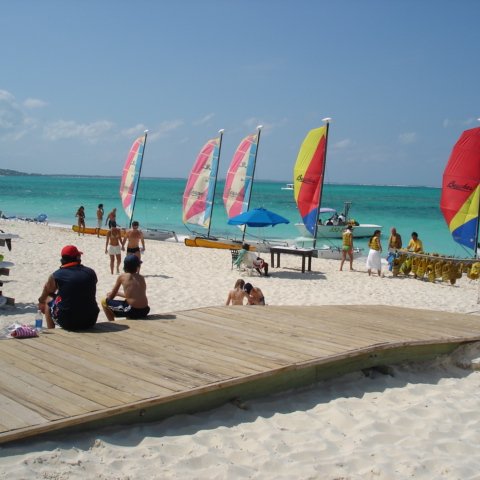
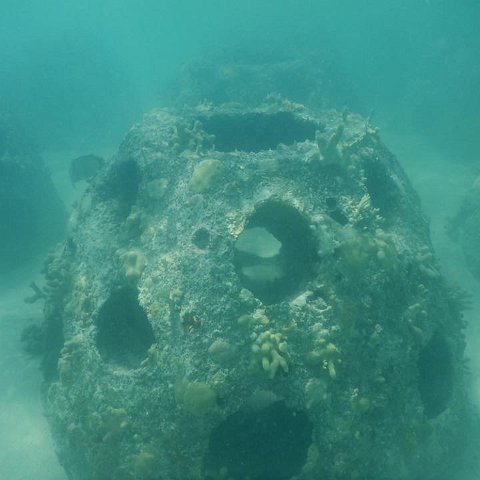
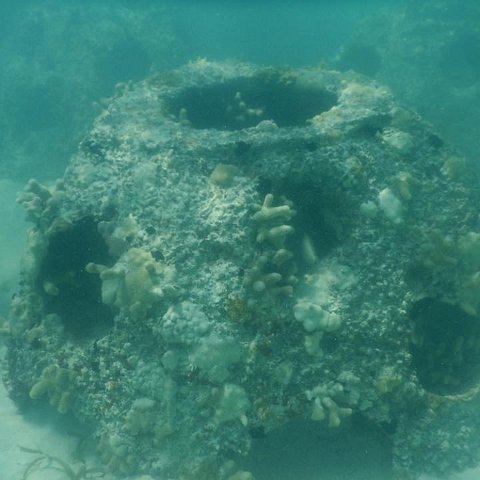
The Beaches Reef Ball? Designed Reef Project has now been completed and being utilized by Beaches clients. As per the proposal submitted, two designed reefs of approximately 100 units each, were fabricated and deployed off the shoreline of the Beaches Resort. The first reef area is centered within the swim zone of the resort confines, with the second reef located to the east of their dock, within the buoyed swim zone. Both reefs are demarcated with buoys to indicate their approximate location.
Reef Ball Coaltion Living Classrooms Project
| Total images: 3
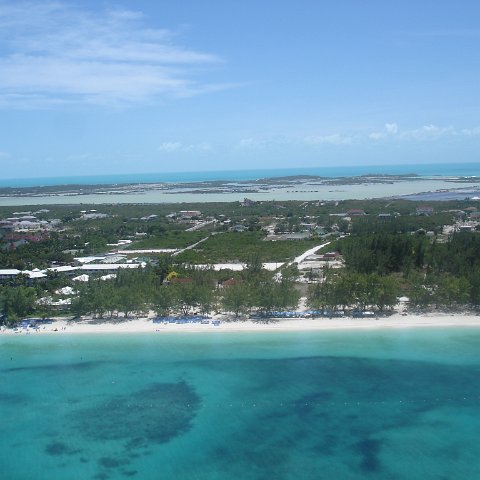
The Turks and Caicos Islands are surrounded by one of the most extensive coral reef systems worldwide (65 miles across and 200 miles long).
A 22 mile-wide channel, the Turks Island Passage, separates the Turks Islands from the Caicos Islands. This 7,000 foot deep passage serves as major transit lines for migrating Humpback Whales, Spotted Eagle Rays, Manta Rays, Turtles and Dolphins.
Excellent visibility (up to 200 feet), pristine reefs, abundant tropical flora and fauna, fish and other marine life, quality diving services and easy conditions make the Turks and Caicos Islands a world class diving destination. There is exceptional wall diving starting in shallow turquoise water and dropping off into the deep blue gives a thrill. Shipwrecks, old and new further increases the multiplicity of the islands as an outstanding diving destination.
Reef Ecology Summer 2002-Reef Ball Coalition
| Total images: 4
Unlock the secrets of the marine world as you learn about tropical marine ecology on the island of Providenciales, located in the Turks & Caicos Islands of the British West Indies.
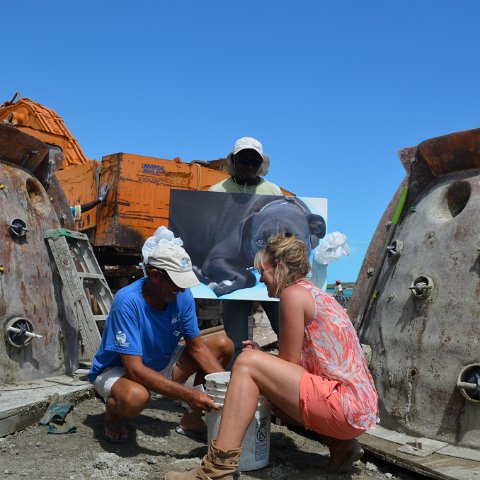
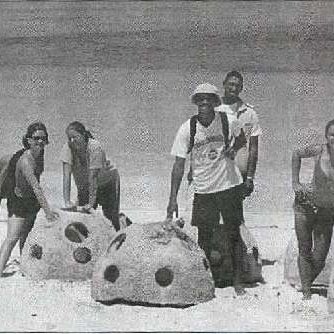
The program focuses on the ways an entire reef system comes together to form a beautiful yet fragile environment. The reef systems become your classroom under the instruction of a professional marine biologist and marine science educators. Scientists estimate that 70 percent of the world?s reefs are in danger of being lost within 40 years. Students in our program will have the unique opportunity to actively help the plight of coral reefs. They will be challenged and fascinated with real-world application and hands-on experience as they construct and deploy artificial reef modules called Reef Balls. Once the Reef Balls are deployed, they become new sub-structures for a coral reef and immediately provide shelter and nurseries for marine species.
Program components include the ecology of marine corals, exploration of mangrove habitats on kayaks, and cultural and historical exploration of the islands. This is a cross-cultural program that integrates students from the US with select students from Providenciales, including Jr. Park Wardens.
The program takes place at the Provo Marine Biology Education Centre, located on an inland canal adjacent to the sea. The Centre is a self-contained facility with dorm accommodations, a large recreation/lecture room, outdoor lab, outdoor dining areas, and a fresh water pool. Participants in the program will also enjoy a full day sail to uninhabited neighboring islands and see Rock Iguanas in their natural habitats, explore undisturbed beaches, and participate in open water snorkeling.
Here?s what a few high school students have said about our program:
?Reef Balls were only part of this fantastic program but they really opened up an insight. They taught us how the reefs are declining and how we can help. It was a neat experience to see how it came together. Everybody working together is cool, and the whole experience is awesome. I hope others get to experience it. Thanks.?
??Reef Balls are awesome. It was the best part of the trip. I want to work with you?e-mail me if you ever need my help with those Reef Balls.? (Pat, summer 2000)
Providenciales Sea Systems Reef Ball Trail Project
| Total images: 54
Giving Mother Nature a Helping Hand
Artificial reefs are man-made structures that provide surface area for corals and other encrusting organisms to grow while offering protective habitat for beautiful tropical fish and other prized species. In essence, they give a jump-start on nature's natural processes by supplying what would take many years of biological growth to accomplish otherwise in terms of structural formation.
What are they made of? Many people think that almost anything tossed into the ocean will eventually become an artificial reef. This is not necessarily true. Lightweight debris usually just ends up back on our shorelines. Substances that are corrosive will eventually break down, usually long before a natural hardened surface can be formed around the original structure. A number of products actually leach toxic chemicals into the surrounding environ, doing more harm than good. A final consideration is aesthetics. Few people are interested in diving or snorkeling on a site that resembles the local landfill or junkyard.
Today's technology advocates the use of prefabricated mold systems that utilize a concrete based product. Aside from maximizing surface area for sessile organisms and providing refuge for mobile animals, considerations for the design of these reef structures include stability, longevity and chemically balanced concrete.
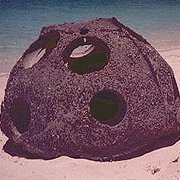
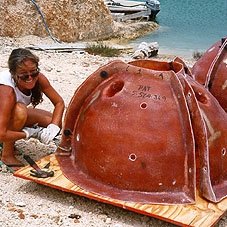
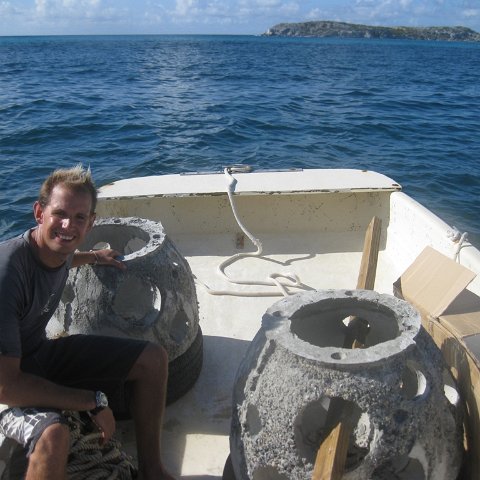
The Reef Ball Development Group has devised a patented fiberglass mold system for the construction of artificial reefs. Reef Balls are hollow, dome-shaped structures designed to imitate the natural reef formations.
Each Reef Ball has its own unique hole sizing and placement, with the surface textured for enhancing settlement of marine life. The units are made with marine friendly concrete which has been combined with additives to create a super-strong, abrasion-resistant structure with a pH similar to ocean waters. They are engineered for underwater stability and longevity, and cause minimal impact to the surrounding areas.
A New Attraction
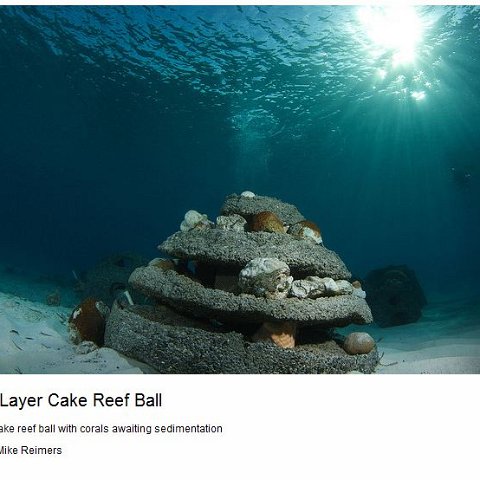
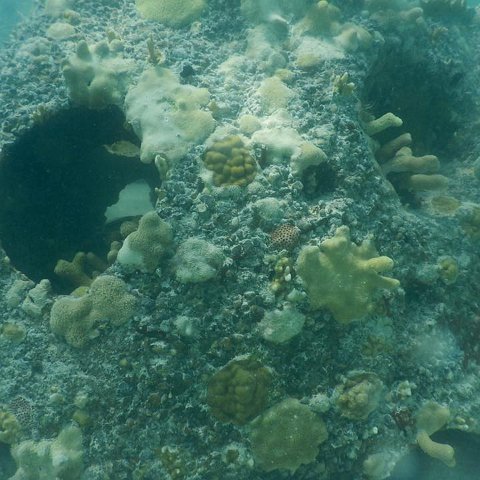
Once deployed, the Reef Ball will begin to come to life through various natural processes. Almost immediately, fish and other mobile marine creatures will migrate into this new habitat in search of safe havens. Primary growth, consisting of a myriad of marine algae, will flourish within the first few months, nurtured by the inputs and outputs of the more mobile species. Corals and other invertebrates will begin to take hold soon thereafter, creating a coraline castle for its colorful inhabitants. Each structure will be a unique creation, each array a community of individuals, and the whole environment a balance of its parts.
Artificial reefs have been used for a number of purposes worldwide. With the decline of our natural coral reef systems, reef restoration has been one of the primary objectives. Other applications include using the structures to build more naturally productive and aesthetically pleasing breakwaters, or for enhancing fisheries production in a given area.
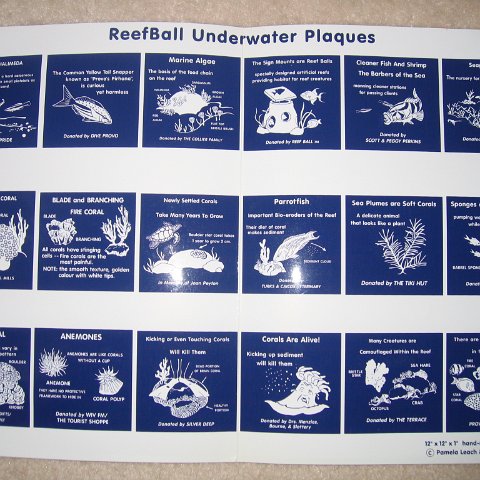
Here in Providenciales, we have used them as the base mounts for our underwater snorkel trails which provide educational information regarding coral reef ecology as well as conservation ethics and stewardship for reef communities. We have now expanded our use of the Reef Ball structures to furnish an alternate snorkeling site in an attempt to divert impact pressures from the other natural nearshore reefs to allow these systems to rebuild and flourish.
The Reef Ball Coalition, http://www.reefballcoalition.com/a non-profit organization, has taken the Reef Ball concept a step further. As with almost all things in this world, it costs money to build an artificial reef. The Coalition has come up with a plan that not only finances the construction of the reef, but provides the needed labor through educational programs that teach participants about the importance of conserving our coral reefs. It is in this manner that the new artificial reef is being constructed on Providenciales. The only cost to the Turks & Caicos is the use of the "Queen's Bottom" as they call it (or is it Princess Alexandria's?), where the fabricated Reef Balls are making their debut.
Reef Ball Coalition Turks and Cacios UGA Project
| Total images: 5
The Turks and Caicos Islands are surrounded by one of the most extensive coral reef systems worldwide (65 miles across and 200 miles long).
A 22 mile-wide channel, the Turks Island Passage, separates the Turks Islands from the Caicos Islands. This 7,000 foot deep passage serves as major transit lines for migrating Humpback Whales, Spotted Eagle Rays, Manta Rays, Turtles and Dolphins.
Excellent visibility (up to 200 feet), pristine reefs, abundant tropical flora and fauna, fish and other marine life, quality diving services and easy conditions make the Turks and Caicos Islands a world class diving destination. There is exceptional wall diving starting in shallow turquoise water and dropping off into the deep blue gives a thrill. Shipwrecks, old and new further increases the multiplicity of the islands as an outstanding diving destination.
All images are copyrighted 1993-2007 (C) by Reef Ball Foundation, Inc. and by the original photographers. High resolution versions of most newer images are available by emailing your request
to reefball@reefball.com. (please provide the URL of the photo requested) Use of images requires a link to www.reefball.org crediting Reef Ball Foundation as the photo source. Please email any photos
you have with Reef Ball images to us and we will post in this photo database. Please indicate if you are freely sharing the photos or wish to retain your original copyrights and we will note that when posted.