Reef Ball Foundation Photos and Project Description Database


Only Search Reef Ball Photos and Project Database
Up one level Geographical Database for photos, videos, GPS Coordinates, news, and project descriptions. » Puerto Rico Reef Ball Projects and Photos

Puerto Rico Reef Ball Projects and Photos
Puerto Rico has undertaken several Reef Ball projects and can be credited as one of the birthplaces of coral transplants on Reef Balls thanks to Dr. Kirby Bowden and Antonio Ortiz, a graduate student at University of Puerto Rico CORALations, an NGO on Culibra and a Reef Ball Authorized Contractor pushes from the grass roots and the Puerto Rico DNR has conducted projects too. Even private citizens have gotten into the act. Click here for World Mapping System Information on Puerto Rico

bermanoilspillandgrounding
Explore this folder
bermanoilspillandgrounding  |  Total images: 2
Copamarina
Explore this folder
Copamarina Ecoresort  |  Total images: 1
coralationspics
Explore this folder
CORALations Reef Ball Projects-Reef Restoration and Research Using Reef Balls  |  Total images: 7
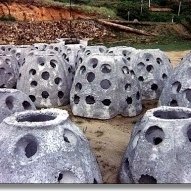
CORALations is a distributor of Reef Ball artificial reef systems for the island of Puerto Rico. These artificial reef modules provide habitat for fish and settlement areas for corals. Reef Balls are made from environmentally friendly concrete designed to mimic natural reef in appearance and last for over 500 years. CORALations and Puerto Rico's Department of Natural and Environmental Resources worked on artificial reef investigations using the environmentally friendly Reef Ball artificial reef systems in Fajardo, Puerto Rico. Reef Balls are inexpensive to deploy and have proven stable during tropical storms and hurricanes. For coastal communities interested in participating in these highly visible artificial reef projects, CORALations will contribute matching funds, evaluate locations, obtain permits and provide free training. NOTE: As a non-profit organization, CORALations puts revenue generated by the leasing of these systems toward the funding of its conservation programs in the Caribbean.
culebra
Explore this folder
culebra  |  Total images: 2
dnrproject
Explore this folder
dnrproject  |  Total images: 9
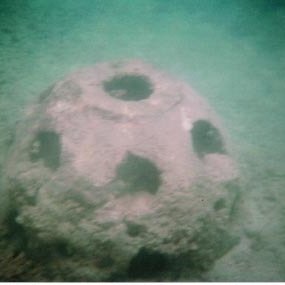
Monitoring Update Oct 1998 (After A Hurricane): The water cleared to a point where we could see no reef balls were overturned at study site (90ft).
margaragrounding
Explore this folder
Margara Oil Tanker Grounding in off Tallabo  |  Total images: 277
The Margara is a 748-foot oil tanker that ran aground over a diverse coral reef three miles south of Tallaboa, Puerto Rico, at 1:15 a.m. April 27, 2006 The vessel is reported to have been navigating by site using land based lights to determine their position and did not request a local pilot. The captain has been tested for intoxication but results have not been published. Given the time of the grounding, fatigue may have been another contributing factor. However, it is inconceivable after historic incidents such as the Exxon Valdez, that a large oil tanker would be navigating near coral reefs without utilizing modern GPS systems and the aid of local pilots. The Margara was over a mile away from the channel designated for use by the tankers entering the port! The grounding coated the seabed with a significant amount of highly toxic tributyal tin (TBT) and destroyed an estimated 79,760 cubic feet of diverse coral reef over at least 3000 square meters of bottom. When it was removed from the reef which required multiple failed attempts, it rotated around the main grounding site and created many additional grounding scars. These additional impacts might have been avoidable had there been a more careful de-grounding procedure. Additionally, it was reported that they were advised to use only floating cables for de-grounding, but that sinking cables were used and these created additional damage to the coral reef. The Reef Ball Foundation, in collaboration CORALations, local scientists and the Puerto Rico Department of Natural and Environmental Resource assembled an internationally experienced team to do a rapid assessment of the coral reef impacted by the groundings. Our coalition completed this task last Monday and was the first to document the damage. A detailed report, monitoring photos and restoration plan will be posted on the Reef Ball Foundation?s website today or tomorrow in draft format. There was no public funding available for this effort and it was funded by NGOs and personal donations of services. Because of expected high sea surface temperatures this summer, the window for saving the damaged corals is very limited. A restoration plan has been made that will allow the damaged corals to be stabilized, propagated and replanted on prefabricated substrate within the next 90 days. Despite the desire of the DNER to complete the rescue of the damaged corals, it is doubtful that a settlement can be reached with the responsible party and governmental processes could occur to allow this to happen in time. However, the NGO community is well equipped to respond immediately.
PalmasdelMarbreakwaterproject
Explore this folder
Palmas Del Mar Reef Ball Breakwater Project  |  Total images: 1
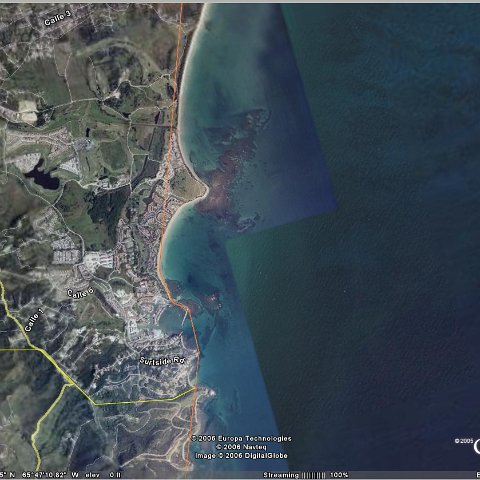
This project is in the planning stages to use Ultra Ball sized Reef Balls to create the largest artificial barrier coral reef in in the world. Imagínese vivir en un Puerto Rico con playas saludables, de anchos litorales y aguas cristalinas, donde se respete tanto el medioambiente como la naturaleza que las rodea. Pues sepa que, aunque la isla tiene la capacidad para destacarse por esto y mucho más, lamentablemente ha perdido terreno, principalmente, por culpa de nosotros mismos. El más grande El arrecife artificial más extenso en el mundo está en la Isla de Antigua. El que se propone para Puerto Rico será casi cuatro veces más grande. Construcciones a orillas de la playa, usos alternos de la arena y descargas al mar son parte del problema, aunque el calentamiento global también representa una amenaza para las playas del País y su eventual disminución. Para el 1985 se estimaba que un 70% de las playas de todo el mundo se encontraban en estado de erosión. Veintiún años más tarde el panorama es desalentador, peor aún para las playas de la llamada Isla del Encanto, donde un clima de olas muy energético pone en peligro, especialmente, a las playas de la costa norte y este. Según Alfredo Torruella, uno de los tres doctores en oceanografía física en el País, cada vez que las olas rompen emiten una energía capaz de generar corrientes, transportar sedimentos y crear el fenómeno de la erosión. Esto, unido al blanqueamiento y mortandad de los corales, debilita las barreras naturales que protegen los litorales de las playas. Como solución, Torruella considera la construcción de arrecifes artificiales como capaces de brindar esa protección natural a las costas que se ha ido perdiendo. Diseñador del arrecife artificial más grande en el mundo, localizado en la Isla de Antigua y construido hace tres años, Torruella se encuentra, actualmente, en busca de los permisos necesarios para la construcción de un arrecife artificial en Humacao. Una vez construido, este será casi cuatro veces más grande del que ubica en Antigua y por ende, el más grande del mundo. Según explicó, el primer paso es estudiar el área donde se proyecta construir el arrecife artificial y desglosar toda la biología que vive en el área. Luego se hace un ?mapa del fondo? o una simulación numérica de la actividad marítima en el lugar, incluyendo movimiento de olas y corrientes. Luego de medir el ?clima de las olas?, se hace un ?modelo de las olas, corrientes y arena?. Posteriormente, se hacen ?configuraciones del arrecife?. ?Se juega con diferentes configuraciones, viendo las características y escogiendo cual es el mejor. En el diseño del (arrecife artificial) de Humacao, por ejemplo, se escogió la versión 48?, dijo Torruella, quien señaló que esta se seleccionó, entre otros aspectos, por debilitar una corriente peligrosa que ubica en el área. Luego de ?optimizar el diseño? se abre paso a ?la creatividad del diseño?. Así, por ejemplo, se procede a hacer senderos para ?snorkeling?, áreas más profundas para bucear e, incluso, áreas para ?surfing?. Luego se seleccionan y construyen los módulos, a base de cemento y otros aditivos que provean cierta aspereza para aumentar la tendencia de los organismos a formar parte del nuevo arrecife. Tras la instalación del arrecife y la verificación con el diseño original, se procede, usualmente, a trasplantar corales. En Antigua se trasplantaron más de 5,000 colonias de 30 tipos de corales diferentes. ?Los arrecifes disipan la energía de la ola, reducen la turbidez y eliminan la erosión?, sostuvo Torruella, quien destacó que en Humacao, por ejemplo, el arrecife a construirse promete con proteger los careyes que allí habitan. Otros beneficios mencionados por el oceanógrafo lo son: la creación de playas, la reducción de corrientes peligrosas y la preservación de la estética de la playa. Aunque no mencionó ningún aspecto negativo, uno que podría surgir es su alto costo. El de Antigua, por ejemplo, ascendió a $5 millones, costo que absorbió un multimillonario que proyecta abrir el área a una zona turística exclusiva. El de Humacao, que proyecta ascender a unos $6 millones, será costeado por vecinos afectados. Sin embargo, según explicó Torruella, el costo inicial podría aplacarse ante las ganancias a largo plazo, especialmente, a base del turismo.
puertoricodraustinbowdenkirbycoraltransplant
Explore this folder
TRANSFORMATION OF ARTIFICIAL CONCRETE "REEF BALL" STRUCTURE  |  Total images: 7
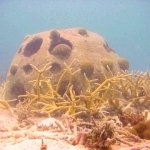
Dr. Austin Bowden Kirby Coral Transplant Project on Reef Balls. First every transplants on Reef Ball Febuary, 2000. TRANSFORMATION OF ARTIFICIAL CONCRETE "REEF BALL" STRUCTURE into living coral heads through the use of implants of JUVENILE massive corals. Implants of massive corals over long lasting artificial reefs, concrete reef balls (a coral-like dome) have proven to be useful for the restoration or development of a small patch reef on back reef area. The potential ability of some massive corals to spread over an artificial reef structure can reduce the time of colony development while enhancing vertical stratification of coral microhabitats. Three concrete "Reef Balls" were deployed at three backreef sites in La Parguera, South of Puerto Rico. These structures were planted with juvenile massive corals (< 20 cm dia.) of several species (Diploria spp., Montastrea spp. and Colpophyllia spp.) using marine cement. Dead coral heads observed near reef balls were also planted with juvenile massive corals. Jeopardized coral populations from shallow reef flat zones were used as a source for transplants (n=64 colonies). Overall survivorship of corals 10 months after transplantation was 94 %. Also, coral colonies overcame the impairment of the wave action whichoccurred during Hurricane Georges.(Bay Balls) These preliminary results indicate a very succesful rate for the methodology employed. However, our team will continue studies for the widespread field testing and refinement of these methods and test massive coral species for differences in survival and establishment strategies (lateral growth vs. upward growth response) on concrete "reef ball" structures at different habitats. -Antonio Ortiz, Lajas, PR


All images are copyrighted 1993-2007 (C) by Reef Ball Foundation, Inc. and by the original photographers. High resolution versions of most newer images are available by emailing your request to reefball@reefball.com. (please provide the URL of the photo requested) Use of images requires a link to www.reefball.org crediting Reef Ball Foundation as the photo source. Please email any photos you have with Reef Ball images to us and we will post in this photo database. Please indicate if you are freely sharing the photos or wish to retain your original copyrights and we will note that when posted.