Geographical Database for photos, videos, GPS Coordinates, news, and project descriptions. » New Jersey Reef Ball Projects and Photos
New Jersey has an active and highly respected artificial reef program. Since 1998 they purchased a large number of Reef Ball molds and use prison labor to crank out tons of Reef Balls. Thousands have been deployed and are often sponsored by individuals, dive clubs and fishing interests.
Click here for World Mapping System Information on New Jersey
Axel Carlson Reef Ball Project Photos
| Total images: 4
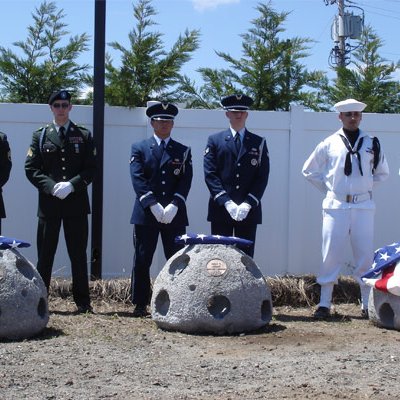
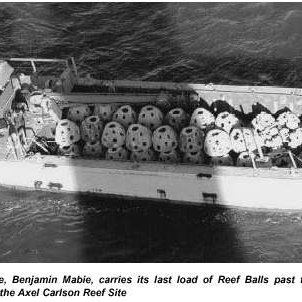
Both the New Jersey Council of Diving Clubs (NJCDC) Reef and the Sea
Gypsies (Club) Reef were built on the Axel Carlson Reef site on August
2, 2000 at latitude-longitude coordinates:
NJCDC Reef: 40 degrees 00.22 minutes
74 degrees 00.13 minutes
Sea Gypsies Reef: 40 degrees 00.18 minutes
74 degrees 00.16 minutes
Barnegat Light and Garden State North Reef Ball Photos
| Total images: 1
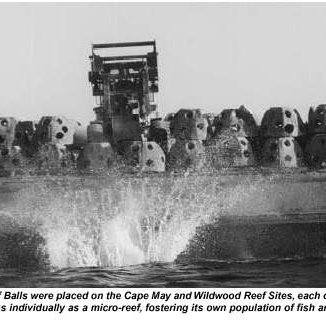
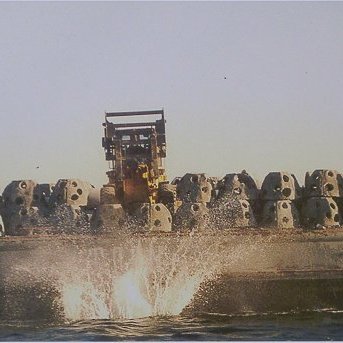
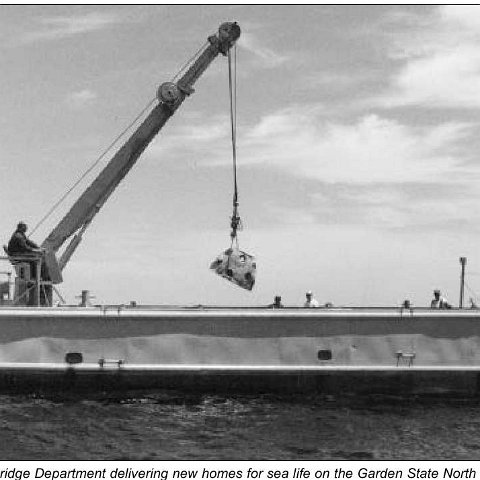
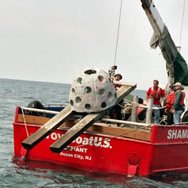
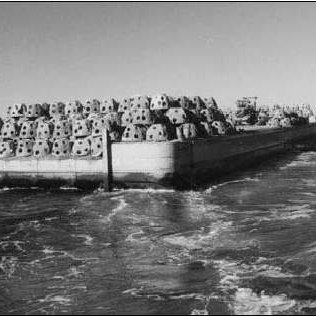
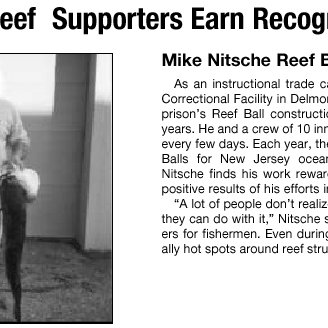
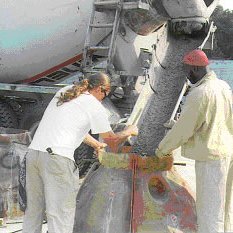
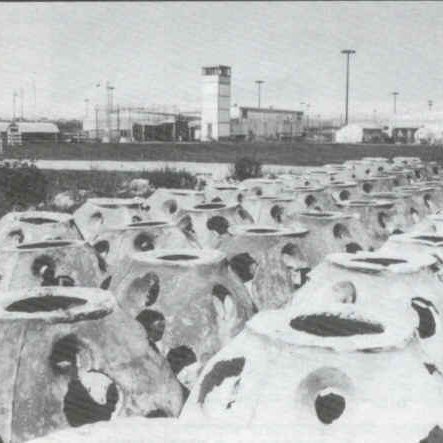
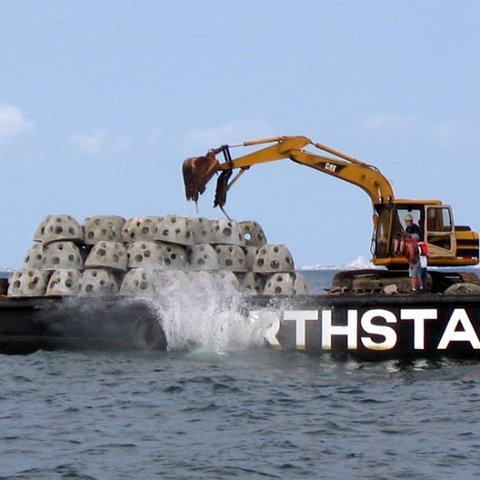
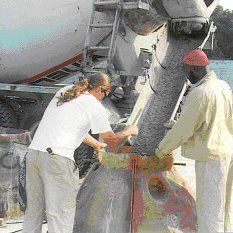
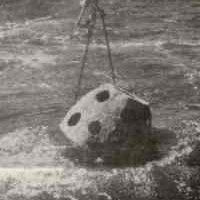
During the summer of 1999, 700 Reef Ball habitats were deployed on the Barnegat Light and Garden State North Reefs. The concrete habitats, resembling small igloos, were fabricated by inmate laborers at Southern State Correctional Facility, located in Cumberland County. Transportation from the prison to the ocean reef sites was provided by the Ocean County Bridge Department. The Reef Ball Program is ongoing, with 700 more habitats scheduled for deployment in 2000.
In most cases, the strategy for deployment is to disperse the Reef Balls far apart on the reef site. The distance between habitats makes them harder to fish and thus, provides a refuge for fish and shellfish. These small sanctuaries will then provide additional fish to help replenish larger reef structures that are subject to greater fishing effort.
First Reef Ball Placed On A Shipwreck
| Total images: 3
The Colleen was a canal tugboat which towed barges on the Erie Canal between New York City and the Great Lakes. She also helped dock ships in port.
the Colleen is a near twin to the Spartan. At about 60 ft depth, large holes in the roof make it easy to drop down several decks inside the wreck, and still have daylight in sight above. Look for lobsters dug in under the edges of the hull, along with a great many Sea Bass. The rudder is cranked 90 degrees to one side, leaving plenty of room to swim through the gap where the propeller should be. At least one APC lies close-by off her stern, upside-down, and a reef ball lies on the aft deck.
Garden State North Reef Ball Photos
| Total images: 2
During the summer of 1999, 700 Reef Ball habitats were deployed on the Barnegat Light and Garden State North Reefs. The concrete habitats, resembling small igloos, were fabricated by inmate laborers at Southern State Correctional Facility, located in Cumberland County. Transportation from the prison to the ocean reef sites was provided by the Ocean County Bridge Department. The Reef Ball Program is ongoing, with 700 more habitats scheduled for deployment in 2000.
In most cases, the strategy for deployment is to disperse the Reef Balls far apart on the reef site. The distance between habitats makes them harder to fish and thus, provides a refuge for fish and shellfish. These small sanctuaries will then provide additional fish to help replenish larger reef structures that are subject to greater fishing effort.
Graphics including Reef Ball life cycle
| Total images: 3
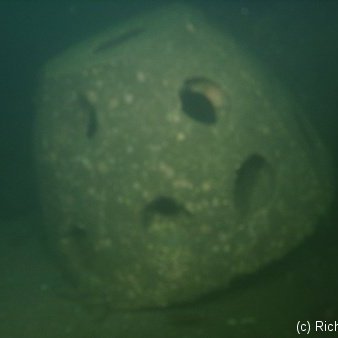
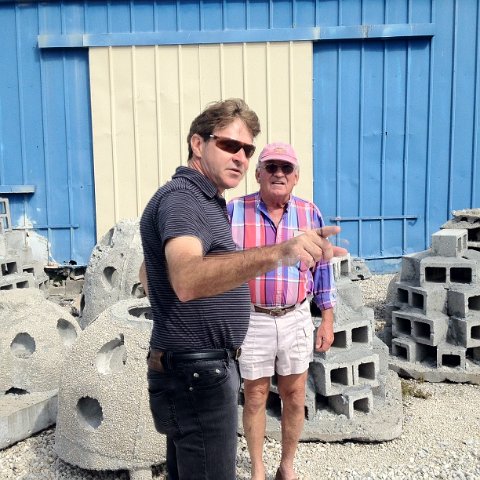
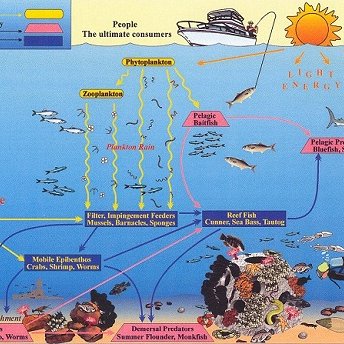
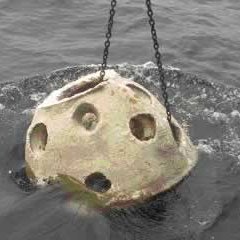
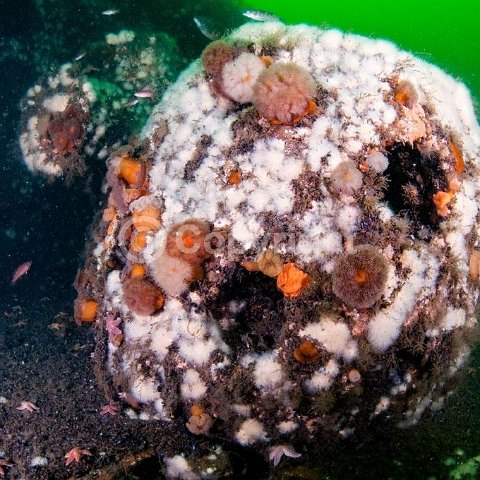
From 2003-2006, the New Jersey Department of Environmental Protection?s Division of Fish and Wildlife will add Reef Ball habitats to artificial reef sites from Little Egg to Cape May inlets. Made of concrete, Reef Balls look like 3-foot-high igloos full of holes, weigh 1,600 pounds and provide hard-structure habitat for marine life ranging from barnacles to sea bass.
The state placed 1,900 Reef Balls off the coast of Ocean County over the past three years and reports improved fishing at these sites. Encouraged by such success, the Division of Fish and Wildlife plans to deploy 700 Reef Balls at each of these reef sites: Wildwood, Cape May (in 2002), Little Egg, Atlantic City (2003), Ocean City, Great Egg (2004).
Anglers, divers and sportsmen?s clubs are encouraged to sponsor the construction of Reef Balls with tax-deductible donations. Sponsors can name their own reef and receive a laminated plaque. For more information, call 609-748-2020 or write the Division of Fish and Wildlife?s Reef Program, P.O. Box 418, Port Republic, NJ 08241.
News About Reef Balls From New Jersey
| Total images: 7
In 1998, 16 fiberglass molds were purchased to fabricate concrete Reef Ball habitats. In 1999, construction of habitats began at Southern State Correctional Facility using inmate laborers. The program is designed to produce 700 habitats each year. Transportation of the habitats to ocean reef sites was provided by the Ocean County Bridge Department and now, by a contractor. In 2002, 650 habitats were placed on 5 reef sites. As of 2002, a total of 2,556 Reef Ball habitats have been placed on 6 reef sites. Some of the larger reefs include Axel Carlson with 169 Reef Balls.Barnegat Light with 490 Reef Balls. Garden State N with 326 Reef Balls and Garden State S with 167 Reef Balls.
Ursinus College SCUBA Dive Team Reef Ball Reef
| Total images: 0
In conjunction with UCDT's pledge to improve the environment by our actions, in 2002, we sponsored the drop of thirty reef balls off of the coast of New Jersey. Each reef ball is three feet tall and three feet wide, and have considerable space between each other. The balls were dropped in a region that is mapped as a fish haven. In any given acre of our plot, there may only be two reef balls. By spacing the reef balls in such a manner, they are extremely productive, supporting thousands of sea bass per ball.
As a proof of our actions, we have received a plaque for on land display, as well as an underwater plaque that states that this particular reef belongs to the Ursinus College Dive Team. We have the exact positioning of our reef and plan on potentially diving it in the years to come.
Young Hero Award for Under Dock Reef Ball Project Photos
| Total images: 2
YOUNG ECO-HERO AWARD
A T.J. Tullo (aged 16): Scientific Discovery, "Improving Marine Life"
After volunteering with Alliance for Living Oceans, T.J. became curious about the impact of housing development on marine life near his home. He installed artificial reefs called "reef balls" under his family's dock, and discovered the "reef balls" improved marine life. T.J. is encouraging greater use of "reef balls" in his neighborhood, and is continuing his testing of the waters and sediment in New Jersey.
All images are copyrighted 1993-2007 (C) by Reef Ball Foundation, Inc. and by the original photographers. High resolution versions of most newer images are available by emailing your request
to reefball@reefball.com. (please provide the URL of the photo requested) Use of images requires a link to www.reefball.org crediting Reef Ball Foundation as the photo source. Please email any photos
you have with Reef Ball images to us and we will post in this photo database. Please indicate if you are freely sharing the photos or wish to retain your original copyrights and we will note that when posted.