
Reef Ball Foundation Photos and Project Description Database


Only Search Reef Ball Photos and Project Database
Up one level Geographical Database for photos, videos, GPS Coordinates, news, and project descriptions. » Georgia Reef Ball Projects and Photos » atlanta

atlanta


Atlantagang
Explore this folder
Atlantagang  |  Total images: 4
atlantareefdwellerspresentation
Explore this folder
atlantareefdwellerspresentation  |  Total images: 2
buildingfoamcoreformoldproductionatdonshouse
Explore this folder
Building Foam Cores for Mold Making At Don Brawley's House  |  Total images: 1
The Atlanta Journal / The Atlanta Constitution DEKALB
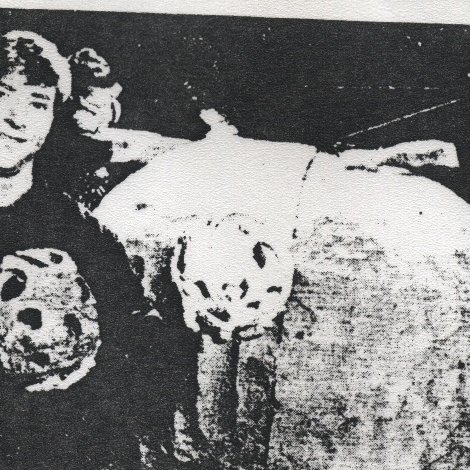
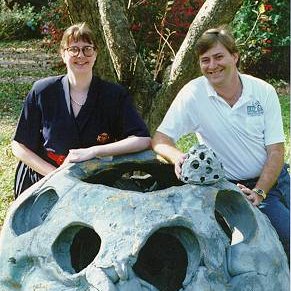
December, 1993, By Dena Smith: Todd Barber holds miniature models of the reef balls as volunteer?s work on a mold. Couple hopes invention revives coral reefs
How often do you think about homeless fish?
If you thought about the fact that our reef systems are being destroyed at a much faster rate than they eau rebuild themselves: and that human activity is the major cause of the destruction, then maybe thinking about homeless fish is not shallow.
Laura Shellhorse and Todd Barber have slopped just thinking about the world's oceans and are doing something about it. The husband and wife team have developed an innovative artificial reef design that will help relieve man-made stress on natural reefs at less cost and more effectively than other attempts. They call it a "Reef Ball."
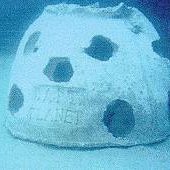
It is made from customized molds that contain an internal, inflatable device, somewhat like an inner-tube. A hose inflates and deflates the inner-tube, allowing the Reef Ball to float to a location and then sink to the bottom. The lining of the mold is designed to create a rough-edged, honeycomb-shaped surface structure that enables coral growth.
Operating out of their Doraville home, or the homes of other volunteers, the couple has so far managed to build and deploy three of the reefs in the Atlantic off West Palm Beach, Fla. Their group, the Reef Ball Development Corp_ plans to build more in an effort motivated not by profit but by a desire to help the ocean environment. "Reefs provide a place for fish to breed and live," said Barber. "Fish produce millions of eggs that float around the water. B; placing more reefs where needed, we're creating a piece for the eggs to develop. We may not be able to save coral, but we may be able to save the fish."
Until now, artificial reefs have been largely a government undertaking. According to Barber, reefs were built with unsightly construction rubble, old planes or ships, tires and other materials unsuitable for the landfills. But Reef Balls have overcome all of the disadvantages associated with artificial reef making, he said. "Ships are too costly and require extensive cleaning," said Barber. "And other types of structures are costly because barges with cranes are needed to deploy the structures, costing at least $3,000 an hour."
Balls can be towed out by recreational boats or even divers, saving thousands of dollars. The actual construction of the 4-foot-by-b-foot Reef Ball is inexpensive. With donated cement and volunteers to deploy the Reef Balls, expenses are kept to a minimum. The group donates the balls free for public use and charges only $IS for those in private use.
The son of an inventor and scuba shop owner in Athens, the full-time business consultant said he's noticed the condition of marine life go from bad to worse over the years. "Think of the ocean as a forest, with corals being the trees," said Barber. "Without trees much of the wildlife cannot exist." The Reef Ball Development Group is making it easy for others to join in the reef-making effort. Currently, the government requires a potential permittee to provide insurance or demonstrate the financial means for the liability incurred with reef building and Lie periodic inspection that's needed, Barber said.
The development group will apply for and hold the permits for individuals -- providing monitoring and maintenance services. But individuals or groups that wish to build a reef should plan several months in advance to allow time for the permits to be processed. To get involved contact Barber at 941-720-7549
"We couldn't do this without volunteers," said Barber.
captplanetproject
Explore this folder
captplanetproject  |  Total images: 25
christmasreefball
Explore this folder
christmasreefball  |  Total images: 3
earlytesting
Explore this folder
earlytesting  |  Total images: 23
Eternalreefsheadquarters
Explore this folder
Eternalreefsheadquarters  |  Total images: 6
reefballpolofundraisers
Explore this folder
reefballpolofundraisers  |  Total images: 3
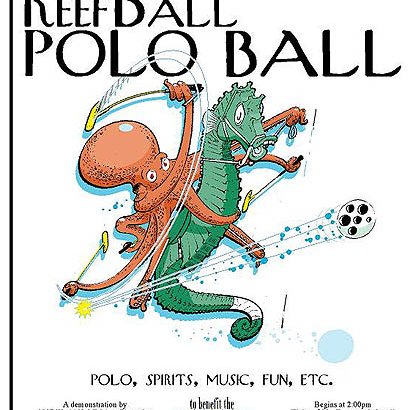
The Reef Ball Polo Match, to benefit the Reef Ball Foundation is on September 23rd 2001 in Atlanta, GA...make plans to attend. There was bands, food, art, drinks, a Polo match and lots of surprises.
sierraclubpresentation
Explore this folder
sierraclubpresentation  |  Total images: 37
toddandjimreturnfromqatar
Explore this folder
toddandjimreturnfromqatar  |  Total images: 1
UGAmagazinetoddandmel
Explore this folder
A Man, A Reef, and A Dream (UGA Magazine)  |  Total images: 3
How many people would leave six-figure jobs, downsize their homes, and use almost all their savings in an attempt to make the world a better place? Luckily for our oceans' reef systems, Todd Barber ( BBA '85, MA '87) is just that type of person. A long-term love for scuba diving and a serious interest in environmental mental issues made him aware of the need to protect our remaining natural reefs. "My interest in reefs began when I learned to scuba dive at age 14 . l was in the Cayman Islands and my father rented an underwater camera for me. I took pictures of one particular little reef and had always intended to return, as an adult, and see how it had grown," recalls Barber. Three years ago, he returned to fulfill his childhood wish, but instead discovered that Hurricane Gilbert had destroyed his favorite reef. "I immediately decided that I would somehow rebuild this reef so that my child could learn how to scuba dive in the same place I did," he says. That night, over a few cocktails, Barber and his father brainstormed possible solutions to decrease a natural reef system's destruction rate. "We came up with this crazy idea of constructing a buoyant and inexpensive artificial reef by pouring concrete over a beach ball. Because of the inflated center, we thought we could float it into the ocean by boat, and save the tremendous expense involved with renting a crane and a barge to transport the object. Sinking the hall would be easy: just deflate the beach ball center," he explains. From that evening came the birth of a new company, Reef Ball Development Group, Ltd. Barber knew exactly where to go for additional man/woman and brain power: his college scuba diving pals. These environmentally aware UGA alumni (including Barber's wife) total 24 of the 27-person organization and hold career paths such as computer hackers, health physicists, engineers, school teachers, real estate specialists, and artists. "Our mission statement charters the group to restore the world's ocean reefs through the development of new ideas, techniques, and devices designed to create aesthetically pleasing, ecologically sound artificial reefs." Todd Barber DIVING IN HEADFIRST "The minute the idea germinated, we were all in contact. In the beginning, a few people would get together according to interests and talents. Some would construct models while others would research concrete and concrete technology," adds Melanie Morgan (BBA '86), Reef Ball director of marketing. While attending a Dive Equipment and Marketing Association (DEMA) trade show, Morgan analyzed the fledgling company's potential book of sales, which was $4-5 million from one convention. "After seeing her results, we decided that it was time to consider Reef Ball as a serious venture," notes Barber. Although aware that leaving his comfortable consulting position at Towers Perrin might close the door forever in that field, Barber took the plunge. Last year, he and his wife, Laura sold their house and used their savings and any other assets he could find to start the business. Barber, Morgan, and four other UGA graduates went to work full-time for Reef Ball Development Group, Ltd. The remainder of the group worked part-time, while maintaining full-time positions in other areas. Barber and Morgan spent all of their time developing the company and making contacts. "Since college, Todd and I have been studying corporate structures and the different ways businesses are run. I think that really helped us develop Reef Ball according to our goals and the company atmosphere that we wanted," says Morgan. Both Barber and Morgan credit the value of their UGA degrees. "Even single thing that I learned at the business school I have applied to this company.I1 continually draw upon things from both my undergraduate and graduate courses," remarks Barber. A LITTLE HELP FROM FRIENDS Making contacts and getting outside help was easier than Barber and Morgan imagined. Barber adds, "Over the past year, we pooled as many internal resources as we could and then for the rest, we approached outside companies and organizations and said, 'This is what we are doing. We are helping the world. Can you help us?' " The positive response was overwhelming. Outside expertise from the academic community, including professors from around the nation and Europe, provided necessary research. The University of Georgia ecology department helped the Reef Ball group research surface technology. Reef specialist Dr. James Porter and a team of graduate students helped the group to determine the appropriate surface texture for attracting hard corals. Corporate America provided the practical research collaboration necessary to develop a concrete mixture that was virtually unknown to the entire underwater ocean-building community. "W.R. Grace & Company,a prestigious concrete admix company, helped us with our concrete formulation. The result was an incredibly strong mix using natural elements, expected to have a 500-year underwater life span," explains Morgan. After much research, the group came up with an effective module, with varying openings and textured surfaces. The final dome-shaped form is made by pouring concrete between a fiberglass mold and an inflatable bladder. Once at its deployment site, the ball slowly sinks as its bladder is deflated. Unlike most private companies, profit is Reef Ball's secondary goal. "Our number one goal has always been and will always be to enhance our ocean system," Barber remarks. "Even though it would have have been financially beneficial to have a proprietary hold on our concrete formulation, we have shared this technology with the reef community. Hopefully, increasing others' knowledge will expedite ocean enhancement, " adds Morgan. ENGINEERING ENVIRONMENTS NOT JUST ATTRACTING FISH Protecting the natural reef system, better fishing, and developing dive sites are all reasons to place artificial reefs. The group customizes the concrete mix and surface structure to meet the objective and application of each particular ball. "We have different size molds and compositions. Different surface structures attract different ocean species. For example, in south Florida the reef ball goal is to grow coral. We mix limestone with concrete so that hard coral will grow on the balls. In Georgia and South Carolina, we mix granite with concrete which results in soft coral growth. Soft coral is beneficial for the fishing industry and scuba diving because it improves the animal habitats and attracts more fish," notes Barber. Unfortunately, Reef Ball Foundation, Inc., cannot place reef balls at free will. Permitting procedures vary in foreign countries and the government controls all artificial reef permits in the United States. Luckily for Barber and crew, all coastal states have granted them permission to place artificial reefs. Although state environmental protection funds provide some support, the Reef Ball group felt others needed to get involved. "Anyone can help. Diving and fishing organizations have worked with the government to place reefs. One will provide the funds and the other volunteers. Individual donations have built and placed reefs. Currently we are looking for corporate sponorships to build company reefs," Barber explains. To date Reef Ball has placed over 1,000 units from Mexico to New York City. Reef sites include the Florida Keys, Fort Lauderdale, West Palm Beach, Charleston, Hilton Head, Virginia, and England. REEFS FOR THE FUTURE The Reef Ball group is predicting a 300 percent growth rate over the next five years. The hope to change the way artificial reefs are built on the planet. "Within three years, we hope to deploy 10,000 reef balls. I really think it is a matter of time before even one will want to get involved," states Barber. The word is traveling. The group has enjoyed national coverage from media organizations such as CNN, USA Today and Popular Science. Local coverage a includes over 50 different television news casts and print articles. The entertainment industry has shown an interest as well. Disney's Epcot Center wants to place several reef balls with marine life on its Living Seas exhibit and has volunteered its dive teams to assist with our Florida reef building projects," claims Barber. Although pleased with all the national attention, the group maintains that perpetuating its legacy is what is most important. Barber concludes, "I want our children try know what we have known, and what made an everlasting impression on me as a boy in the Cayman islands ... the remarkable beauty of the reefs."
woodstockoffice
Explore this folder
woodstockoffice  |  Total images: 1


All images are copyrighted 1993-2007 (C) by Reef Ball Foundation, Inc. and by the original photographers. High resolution versions of most newer images are available by emailing your request to reefball@reefball.com. (please provide the URL of the photo requested) Use of images requires a link to www.reefball.org crediting Reef Ball Foundation as the photo source. Please email any photos you have with Reef Ball images to us and we will post in this photo database. Please indicate if you are freely sharing the photos or wish to retain your original copyrights and we will note that when posted.