Reef Ball Foundation Photos and Project Description Database


Only Search Reef Ball Photos and Project Database
Up one level Geographical Database for photos, videos, GPS Coordinates, news, and project descriptions. » Cayman Island Reef Ball Projects and Photos

Cayman Island Reef Ball Projects and Photos
1) Marriott Breakwater engineering, 2) Marriott breakwater construction and deployment training Phase I, 3) Marriott Breakwater extension engineering, construction, deployment training, 4) Tamarind Resort Breakwater engineering, 5) Marriott breakwater coral propagation and planting, 6) Cemetary Reef Construction and Deployment, 7) Cemetary Reef coral planting and aquascaping, 8) Recommendations for breakwater at Government Park, 9) Recommendations for development of a Red Mangrove Nursery, 10) Recommendations for red mangrove planting for mitigation, 11) Recomendations for red mangrove planting south shore. Click here for World Mapping System Information on Cayman Islands

Caymanmarriottbreakwaterproject
Explore this folder
Cayman Marriot Reef Ball Submerged Breakwater Beach Erosion Control Project  |  Total images: 524
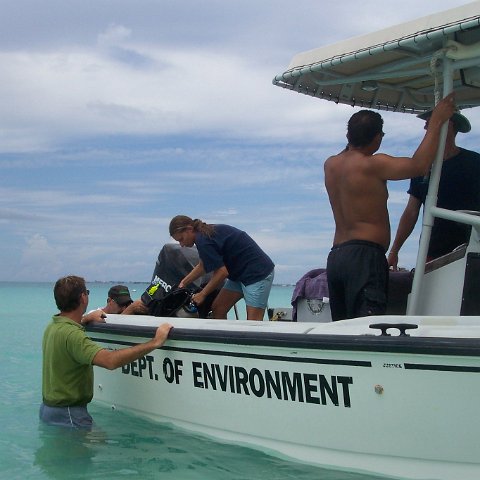
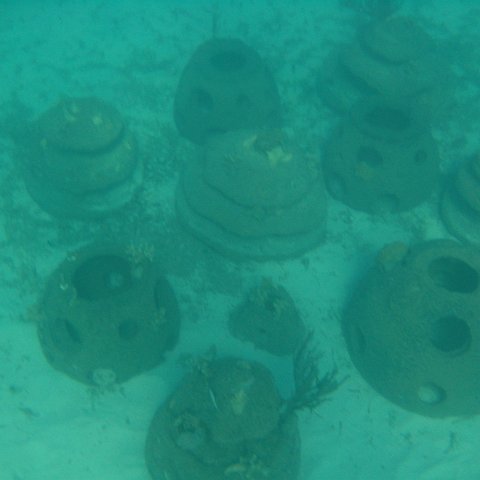
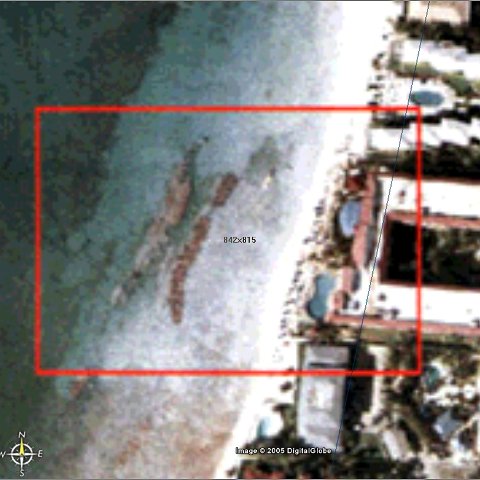
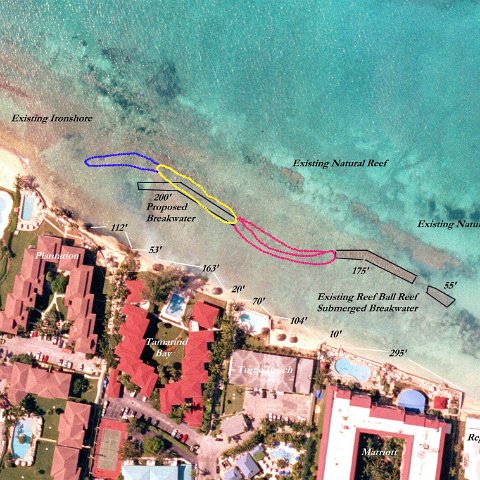
Over the last several years, the Cayman Beach Marriott Resort has built a submerged breakwater using Reef Balls and it has built up a beautiful beach whereas before the project the beach was undercutting the seawall and the resort was beachless much of the year. When an extention was added in 2005, the Reef Ball Foundation activated our Coral Team to plant corals on the submerged breakwater as an investigation to the hardiness of corals being used frequently by guests for snorkeling and to test the concept of adding corals after some growth had already occured. At the same time, a test Reef Ball reef was created near Cemetary Reef off seven mile beach with new Reef Balls to compare results. The Reef Balls survived the category 5 hurricane that deluged the island due to an anchoring system developed by Dr. Lee Harris. The initial Reef Balls were built by Hadsphaltic, and the second extention was built by West Indian Marine. Both had deployment and anchoring supervision by Reef Innovations and Dr. Lee Harris. The Reef Ball Coral Team was sponsored by the Marriott, Red Sail Sports, The Cayman Department of Environment and the Reef Ball Foundation. In kind contributions were numerous from the local community. Monitoring in 2006 indicated that the Reef Balls were protecting the beach well, but there were some signs the reef might be too shallow and too wide during large wave events. The Department of Environment observed some "ponding and channeling." Dr. Lee Harris will use this information to fine tune computer models used to determining the proper crest width and height for future projects. The Marriott might also need some adjustments which would entail the simple repositioning of some units to create more porousity during storms.
caymanmangrovesproject
Explore this folder
Cayman Island Department of Environment Red Mangrove (Rhizophora mangle) Projects  |  Total images: 603
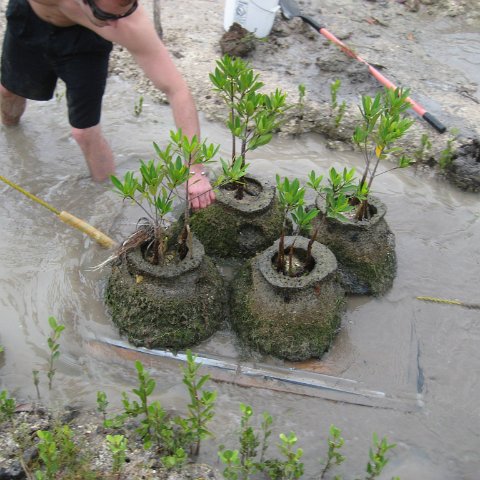
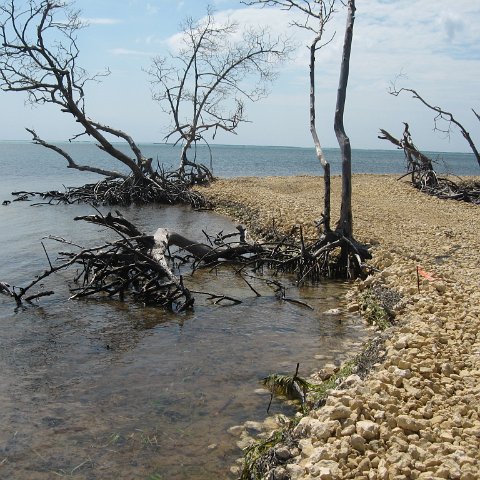
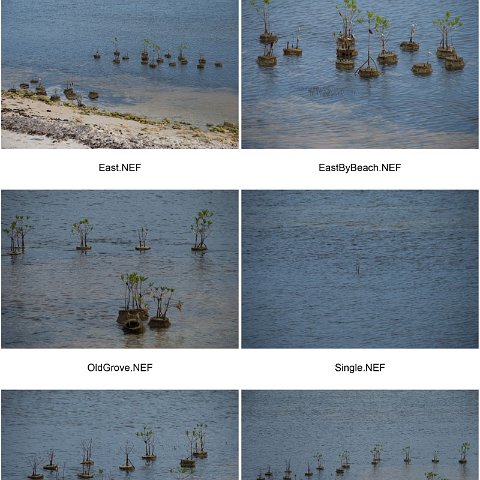
After the hurricane, about 80% of the Red Mangrove stands in the Cayman islands where lost. The Department of Environment has focused attention on rehabilitating these stands. The first major effort has involved the creation of a plant nursery to grow Red Mangroves for rehabilitation projects and involves assistance from Reef Ball's Red Mangrove Volunteer Teams. Future projects will include the planting of the nursery stock throughout the island in areas most affected by the storm damage.
Cemetaryreefproject
Explore this folder
Cemetary Reef Project  |  Total images: 899
The Reef Ball Foundation, working with the DOE & West Indian Marine deployed and anchored 4 reef balls and planted them with coral as a one year test for nearshore reef habitat rehabilitation after hurricane damage weakened nearshore reefs. One year later, the monitoring showed a sucess survival of corals and good fish populations including fish spawning on the Reef Balls. However, coral growth was slow and some transplants did not survive likely due to the nearshore loss of red mangroves that have an interconnected ecosystem providing corals with both cleaner water and food supplies.
governmentparkbreakwaterproject
Explore this folder
This Project Is for Erosion Control with Red Mangroves at Government Park...it is only in the planning stages.  |  Total images: 4
reefcrestmonitoring
Explore this folder
Reef Crest Monitoring  |  Total images: 45
In November, 2006, the Reef Ball coral team visited the north wall crest reef for an observational monitoring. Crest health was recovering well from the hurricane although there was some signs of stress from human use (such as plastic bags in the reef) and water quality (including some minor bleaching). Over the crest and on the wall, health was good but scroll corals were showing signs of heavy bleaching.
timarandbreakwaterproject
Explore this folder
Timarand Breakwater Project Investigation Photos-This project has not been started and is only in investigative stages.  |  Total images: 2
DOEcoralpropagationtrainingproject2005
Explore this folder
Reef Ball Coral Team Demonstration to Department of Environment on Coral Propagation & Planting Nov 2005  |  Total images: 52
The Reef Ball Coral Team demonstrated its coral propgation and planting technologies to the Department of Environment in Nov of 2005 so the Department of Environment could better evaluate how this technology could be applied for environmental rehabilitation projects on the island.
ReefBallCoralTeam2005CoralPropagationProject
Explore this folder
Grand Cayman Coral Propagation and Nearshore Restoration Project  |  Total images: 645
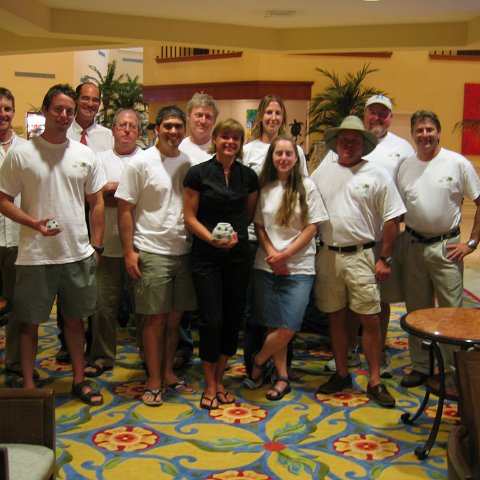
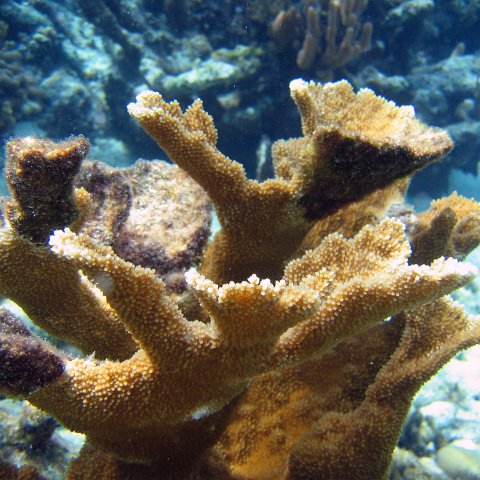
The Grand Cayman Marriott Beach Resort called on the Reef Ball Foundation, Inc. for rapid "Coral Team" activation to rescue imperiled corals and to train the Cayman Government on the latest and most successful techniques in coral reef and mangrove rehabilitation. The Foundation?s world renowned Coral Team is essentially a volunteer network of hundreds of specially trained experts in the field of coral propagation, coral rescue and coral planting. The Coral Team was able to send 20 experts plus a filming crew from the BBC that will feature the project in an upcoming series entitled "Jewels of the Caribbean." Because the team wanted to practice for rapid activations as a result of training for recent natural disasters and since imperiled corals were identified it was decided to conduction the activation as quickly as possible. From activation to finish, the team assembled and completed all assigned tasks in just 3 weeks with only one week on site. Such a rapid activation required enormous local support and interest. Being the overall sponsor of the project, the Grand Cayman Marriott Beach Resort offered the team accommodations and food. Red Sail Sports jumped in quickly offering scuba gear and boating support. Although the Grand Cayman Marriott Beach Resort had already deployed numerous modules with plugs designed to accept propogated corals, the Coral Team wanted to deploy a few Reef Balls to mark locations for continued restoration and for monitoring purposes, so John MacKenzie of West Indian Marine jumped in and donated 6 Reef Balls and top notch deployment and anchoring services from their ultra modern boat fleet. Without time for additional fund raising efforts, the Reef Ball Foundation dipped into their emergency activation reserve budget and paid for whatever items that could not be organized in two short weeks such as rental cars, coral propagation tools/supplies, educational signs, and provided assistance for team members. With activation financially possible, there was only one question...could the required permits be issued in just two weeks? You bet, the highest levels of the Cayman Island government also mobilized quickly and recognized the importance of protecting the reefs that are close to every Caymanian's heart. In fact, the government....rather than issue permits to the group decided to take an even more active role and converted the project to a governmental level complete with boats, fuel and four extremely dedicated employees to serve as local expert. Each of these employees were certified as members of the Reef Ball Coral Team and are eligible for activation in future projects if required in the Cayman Islands or elsewhere in the world.. Prior to the hurricane, the Grand Cayman Marriott Beach Resort had created a Reef Ball submerged breakwater reef system to protect its beach from seasonal erosion using 236 designed reef modules. The project has been monitored by Dr. Lee Harris, P.E. from the Florida Institute of Technology and the Reef Balls have performed nicely for beach protection. However, Dr. Harris was aware that even more could be done, biologically, as he was also an engineer on the world's largest coral rehabilitation project in Antigua. during which the concept of having a worldwide, rapidly deployable, Coral Team was spawned. During a visit to monitor the breakwater after the category 5 hurricane Ivan, Dr. Harris suggested to the Marriott that his diving experiance suggested that deeper and mid-water reef ecosystems were spared by Ivan but there had been quite a few changes to the near shore ecosystems. Dr. Harris was amazed, but proud, that his anchoring designs and engineering had allowed the Reef Balls to survived the storm without movement or damage, but some of the natural reefs and many of the mangrove ecosystems were not so lucky. Chris Saiego, Managing Director of the Marriott, agreed. They jointly decided to survey and determine if corals needed rescue or stabilization. They contacted Todd Barber, Chairman of the Reef Ball Foundation, to get instructions on what to look for so the Reef Ball's Coral Team could assess the situation. Dr. Harris's intuition was confirmed. John Walch, President of the Reef Ball Coral Team reviewed the photos and recognized a perfect time to activate the Coral Team. It was also a great time to test the team limits since it was already in activation mode for Phase II Tsunami relief in Phuket Thailand in October. (Thailand's coral rehabilitation project). Moments later, emails went out to Coral Team members in 50 countries. Within 3 days, the team was chosen and plane tickets where booked. Simultaneously, The Reef Ball Foundation contacted the BBC who requested to be invited at the next Coral Team activation in the Caribbean, and a crew was dispatched. Within two weeks the team landed and started working even before bags were unpacked. Starting each day at dawn and working in the field until dusk and aided by enormous local support they stayed focused on the tasks at hand.. This is was nothing new to the seasoned Coral Team...just another day fulfilling their passions to aid our world's aquatic ecosystems.
finalposter14

news
Explore this folder
news  |  Total images: 5
posthurricanenearshorehabitatsrehabpowerpointpics
Explore this folder
posthurricanenearshorehabitatsrehabpowerpointpics  |  Total images: 0
publiceducation
Explore this folder
Cayman Island Local Briefings  |  Total images: 1
The Reef Ball Foundation conducts workshops for locals to learn about our islandwide activities.
satmap
Explore this folder
satmap  |  Total images: 1
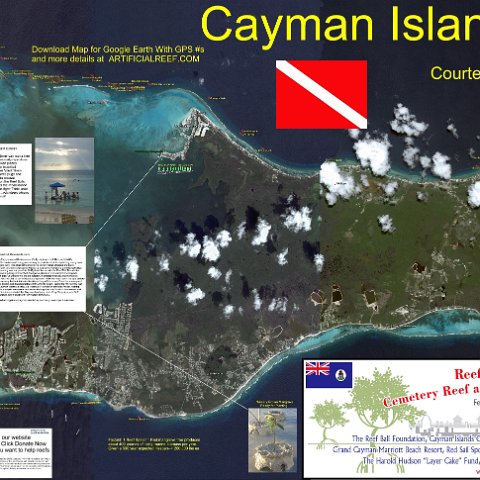
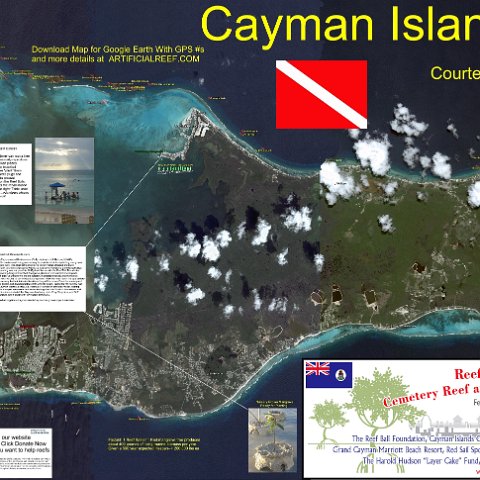
caymanislandposter
Explore this folder
caymanislandposter  |  Total images: 1
barryrichermangrovereefballproject
Explore this folder
barryrichermangrovereefballproject  |  Total images: 3
feb2007CNNHeroShots
Explore this folder
feb2007CNNHeroShots  |  Total images: 32
SouthSoundPrivate
Explore this folder
SouthSoundPrivate  |  Total images: 3


All images are copyrighted 1993-2007 (C) by Reef Ball Foundation, Inc. and by the original photographers. High resolution versions of most newer images are available by emailing your request to reefball@reefball.com. (please provide the URL of the photo requested) Use of images requires a link to www.reefball.org crediting Reef Ball Foundation as the photo source. Please email any photos you have with Reef Ball images to us and we will post in this photo database. Please indicate if you are freely sharing the photos or wish to retain your original copyrights and we will note that when posted.