Geographical Database for photos, videos, GPS Coordinates, news, and project descriptions. » Bahamas Reef Ball Projects and Photos » Eleuthera Reef Ball Projects and Photos » BREEF Sponsored Reef Balls for The Island School
BREEF decided in 2000 to purchase equipment to make Reef Balls, a specific type of artificial reef made out of concrete, and donate them to The Island School.
When a hollow dome of concrete is placed in shallow water what does it do? Sir
Nicholas Nuttall from the Bahamas Reef Environment Educational Foundation
(BREEF) supplied The Island School with the materials and know-how to construct Reef Balls in May of this year. The group of students studying artificial reefs realized that reef balls were a step up from their cinder block and conch shell artificial reefs that they studied this spring. With the smaller homemade reefs in place this past spring, student research clearly demonstrated that an increase in the structural complexity of the underwater habitat was associated with increased abundance and diversity of reef fish. This could be an asset to local fishermen and The Bahamas De-
partment of Fisheries.
The reason BREEF is supporting Reef Ball technology at The Island School is that recent developments in marine policy in the Bahamas place reef balls in an ideal position to make a difference. As the Department of Fisheries is educating local communities about the planned Marine No-Take Reserve at Cape Eleuthera, local fisherman are not excited to give up fertile grounds for harvesting conch, crawfish, and reef fish like groupers and snappers. But Reef Balls, placed outside the proposed reserve area, would provide local fishermen with an alternative catch.
At the same time, Reef Balls placed inside the reserve would encourage fish to remain within an area that is not under fishing pressure. The essential ingredient to gaining further local support, for these ideas is proof. The students conducting research here at The Island School will document the changes in fish populations, coral recruitment, and algae growth on the Reef Ball structures and hope to provide evidence that will help policymakers and residents decide how to best use the tools at hand to keep the marine environment of the Bahamas beautiful for the future.
Bailey Clear's Reef Ball Experiance
| Total images: 2
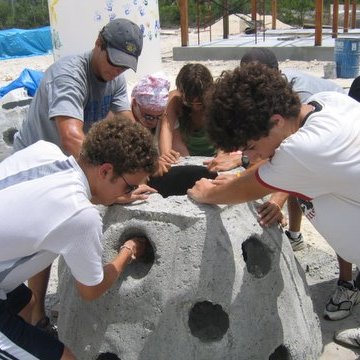
I am involved with the Artificial Reefs Research Project here at the Island School. For this project, we have created artificial reefs to attract greater amounts of fish to the local ocean area. These artificial reefs are basically 900-pound balls of concrete made in molds to a specific shape.
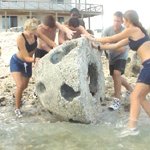
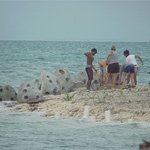
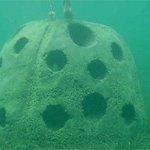
Once we created the latest batch of reef balls, we had to decide where to put them and then figure out how to move them to their spots. We finally decided that the best spots would be right along the coast, in water that is only three or four feet deep. To get the balls to their designated locations, we decided to put one giant buoy into the middle of each reef ball, then roll the ball along the coast in the shallow water, with the hope that the flotation of the buoy would make moving the ball easier.
Unfortunately, the reef balls are not completely round and are still very heavy even when they?re in the water with a buoy floating inside them. However, the rolling process went surprisingly quickly, and we managed to get four reef balls out in one day. While moving them, we sang whatever songs sprang to mind and discovered that the more grunting and loud noises we made, the easier it was to move the ball.
Island School Reef Ball Construction.
| Total images: 19
Since 2000, students at The Island School have made over 50 reef balls and are studying which plants and animals colonize the artificial reefs.
Reef Ball Erosion Control Project
| Total images: 9
Students are placing reef balls in groups around the coast of The Island School, in an effort to prevent erosion of the soil around the coast. There is lots of water moving back and forth across the peninsula of The Island School, and waves and wind also tend to carry away sediment. Over time (and especially during storms) The Island School is losing land out to sea. So reef balls might not just be useful for attracting fish; they might also slow the rate of soil loss.
Student Monitoring of Reef Balls
| Total images: 4
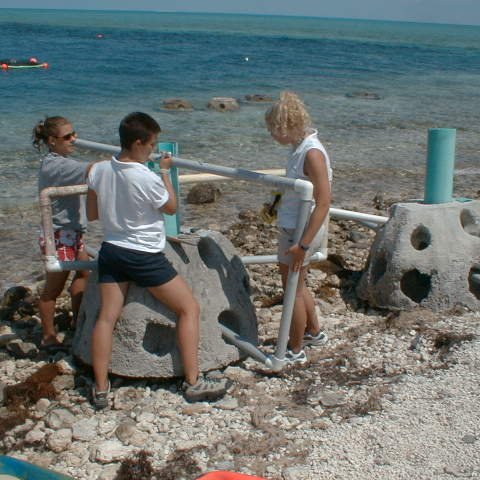
Since then Island School students have reported seeing wrasses, grunts, groupers, doctor fish, snappers, butterfly fish, and many other species of fish on the reef balls. Students have placed reef balls close to natural reefs, far from natural reefs, on sandy bottom, on grassy bottom surfaces, and added halo structures of PVC to try and make the artificial reefs more attractive to sea creatures.
All images are copyrighted 1993-2007 (C) by Reef Ball Foundation, Inc. and by the original photographers. High resolution versions of most newer images are available by emailing your request
to reefball@reefball.com. (please provide the URL of the photo requested) Use of images requires a link to www.reefball.org crediting Reef Ball Foundation as the photo source. Please email any photos
you have with Reef Ball images to us and we will post in this photo database. Please indicate if you are freely sharing the photos or wish to retain your original copyrights and we will note that when posted.